
Choosing the right location for software development is a critical decision for businesses. Whether to go for a local (US-based) team or opt for offshore development depends on several factors, including cost, quality, and project requirements. While offshore development often presents a more affordable option, it comes with its own set of challenges. On the other hand, US-based software development provides benefits in terms of communication and quality but may come with higher costs. When choosing between local and remote teams, businesses often analyze onshore vs offshore software development to balance cost efficiency with communication and quality expectations.
This article explores the key differences between US-based and offshore software development, highlighting factors such as cost, quality, and those that influence your decision-making. Understanding these factors can help you determine the best approach for your specific business needs.
Cost Comparison: US vs Offshore
When deciding between US-based and offshore software development, one of the most significant factors is cost. So, one of the most common questions businesses ask is how much software development costs, especially when comparing US-based and offshore teams.
Average Software Development Rates in the US vs Offshore Markets
In the US, software development rates can range from $80 to $200 per hour, depending on the complexity of the project and the location of the developers. Larger cities like San Francisco or New York often feature higher rates due to demand and cost of living. Offshore, the rates are much more variable, with countries like India and Southeast Asia offering rates as low as $15 to $50 per hour. Western and Eastern European markets typically offer rates ranging from $25 to $150 per hour, depending on the skill set and location.
Breakdown by Project Type
- Web Development: In the US, web development rates typically range from $100 to $175 per hour. Offshore markets like Eastern Europe or India can offer rates starting from $25 to $50 per hour.
- Mobile Development: Mobile app development tends to be more specialized and can cost anywhere from $90 to $200 per hour in the US. Offshore rates for mobile development generally start around $20 to $75 per hour in regions such as Latin America and Southeast Asia.
- Enterprise Software Development: Due to the complexity and scale of enterprise projects, the US can expect rates between $125 and $250 per hour, while offshore rates can range from $30 to $100 per hour, depending on the region.
Hidden Costs
While offshore development offers attractive hourly rates, it is essential to account for hidden costs that may arise during the course of the project.
- Communication: Managing remote teams often leads to communication challenges, especially when there is a time-zone difference. This may result in delays, miscommunications, and more time spent on coordination.
- Project Management: Offshore projects often require additional oversight to ensure milestones are met and quality is maintained. This can lead to additional project management overhead.
- Revisions: Time-zone differences and language barriers can result in misunderstandings that cause revisions. These revisions may increase costs as developers spend more time fixing mistakes.
Understanding these hidden costs is crucial when evaluating whether the cost savings of offshore development outweigh the potential additional costs. A clear grasp of onshore vs offshore software development helps companies anticipate hidden costs such as time-zone delays, project management overhead, and potential communication gaps.
Software Development Rates by Region
Understanding offshore development rates is essential for accurately estimating your project budget. Below is a comparison of hourly rates in different regions.
| Region | Average Hourly Rate | Advantages | Challenges |
|---|---|---|---|
| North America (US & Canada) | $80–$200/hour | High technical standards, strong QA, and real-time communication | Expensive, limited talent pool for niche skills |
| Western Europe | $60–$150/hour | Skilled developers, closer time zones for communication | Higher cost compared to Eastern Europe or Asia |
| Eastern Europe | $25–$75/hour | High-quality developers, cultural proximity to Western markets | Language barriers, and less experienced in some niches |
| India & Southeast Asia | $15–$50/hour | Cost-effective, large talent pool, expertise in web and mobile apps | Time-zone challenges, variable code quality |
| Latin America | $25–$70/hour | Proximity to the US, good communication, and cultural similarity | Less advanced in some specialized areas, smaller talent pool |
Typical Rates by Specialist
When considering offshore software development, it is important to understand how rates can vary by specialist. Below is a breakdown of typical rates for various development roles:
- Frontend Developer: Rates for frontend developers can range from $40 to $150 per hour, depending on experience and location. US developers generally charge between $100 and $175 per hour, while offshore developers in regions like Eastern Europe or India may charge from $20 to $60 per hour.
- Backend Developer: Backend developers in the US typically charge between $90 and $200 per hour. In offshore markets, rates can range from $30 to $75 per hour, with differences depending on the region’s expertise.
- Full-Stack Developer: A full-stack developer in the US may cost anywhere from $100 to $225 per hour, whereas offshore developers typically charge between $30 and $80 per hour.
- Mobile App Developer: Rates for mobile app developers in the US are around $100 to $200 per hour. Offshore developers can charge anywhere from $25 to $80 per hour, depending on their experience and the region.
- QA Engineer: In the US, QA engineers charge from $50 to $125 per hour. Offshore rates typically range from $15 to $50 per hour.
- Project Manager: US-based project managers in software development can cost from $80 to $150 per hour. Offshore rates tend to be lower, ranging from $25 to $65 per hour.
- UI/UX Designer: Rates for UI/UX designers in the US range from $70 to $150 per hour. Offshore designers in regions like Eastern Europe or Southeast Asia may charge between $25 to $75 per hour.
Factors Affecting Cost
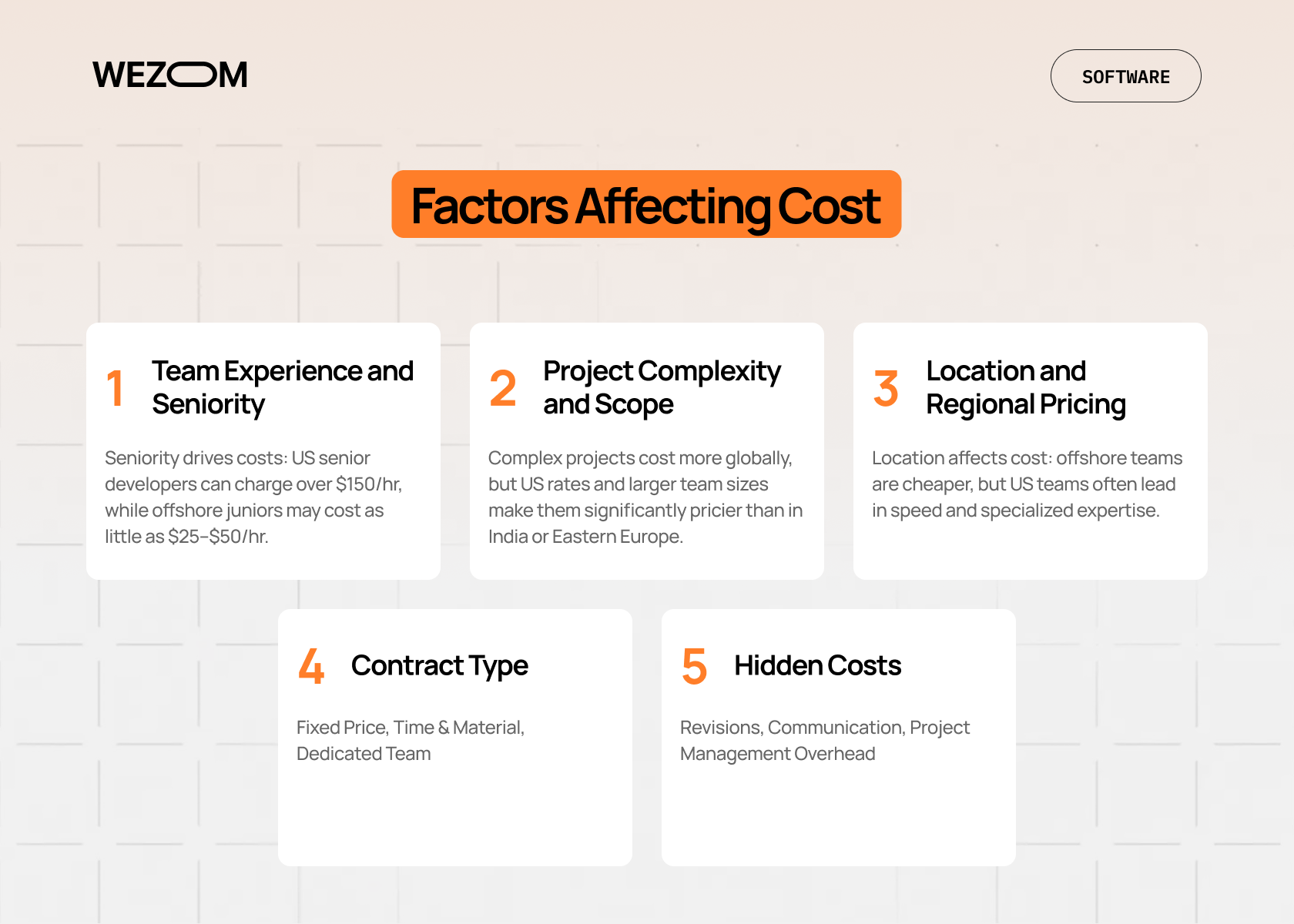
Several factors play a significant role in determining the overall cost of offshore software development, whether you opt for US-based developers or offshore teams.
Team Experience and Seniority
The experience and seniority of the development team greatly influence the cost of a project. Senior developers, who bring extensive experience and expertise to the table, typically command higher hourly rates. In both the US and offshore markets, the level of seniority can significantly impact software development pricing. For example, a senior backend developer in the US can charge upwards of $150 per hour, while a junior developer in an offshore location may charge only $25 to $50 per hour.
Project Complexity and Scope
The complexity and scope of a project are primary factors in determining costs. Large-scale enterprise applications, which require more robust infrastructure, testing, and maintenance, will naturally cost more, regardless of the location. For example, an enterprise software project in the US can cost significantly more than a similar project in India or Eastern Europe, primarily due to the larger team sizes, longer timelines, and higher hourly rates in the US.
Location and Regional Pricing Differences
As discussed in earlier sections, location is a crucial determinant of cost. While offshore development often offers lower hourly rates, it is important to consider factors such as the skill level, expertise, and availability of talent in each region. For example, although developers in Eastern Europe and Latin America may offer more affordable rates, their quality and speed might not always match US-based teams' expertise in specialized technologies.
Contract Type: Fixed Price, Time & Material, Dedicated Team
The contract type chosen for the project also affects the cost of offshore software development.
- Fixed Price: This is ideal for projects with a clearly defined scope, but it may come with a higher upfront cost due to the fixed nature of the contract.
- Time & Material: This flexible approach is often used for long-term projects, but it may lead to higher costs as the project scope changes or expands over time.
- Dedicated Team: In this model, a client hires a dedicated offshore team for a set period, which may result in a more predictable monthly cost but often requires careful management to prevent scope creep.
Hidden Costs: Revisions, Communication, Project Management Overhead
In addition to direct development costs, businesses should also account for hidden costs. These can include:
- Revisions: If the requirements are unclear or the communication is inefficient, revisions can become a high hidden cost.
- Communication: Time-zone differences, language barriers, and cultural misunderstandings can slow down the communication process, increasing the overall project cost.
- Project Management Overhead: Offshore development often requires a greater level of oversight to ensure that the project stays on track, which can result in additional management costs.
Quality Comparison: US vs Offshore
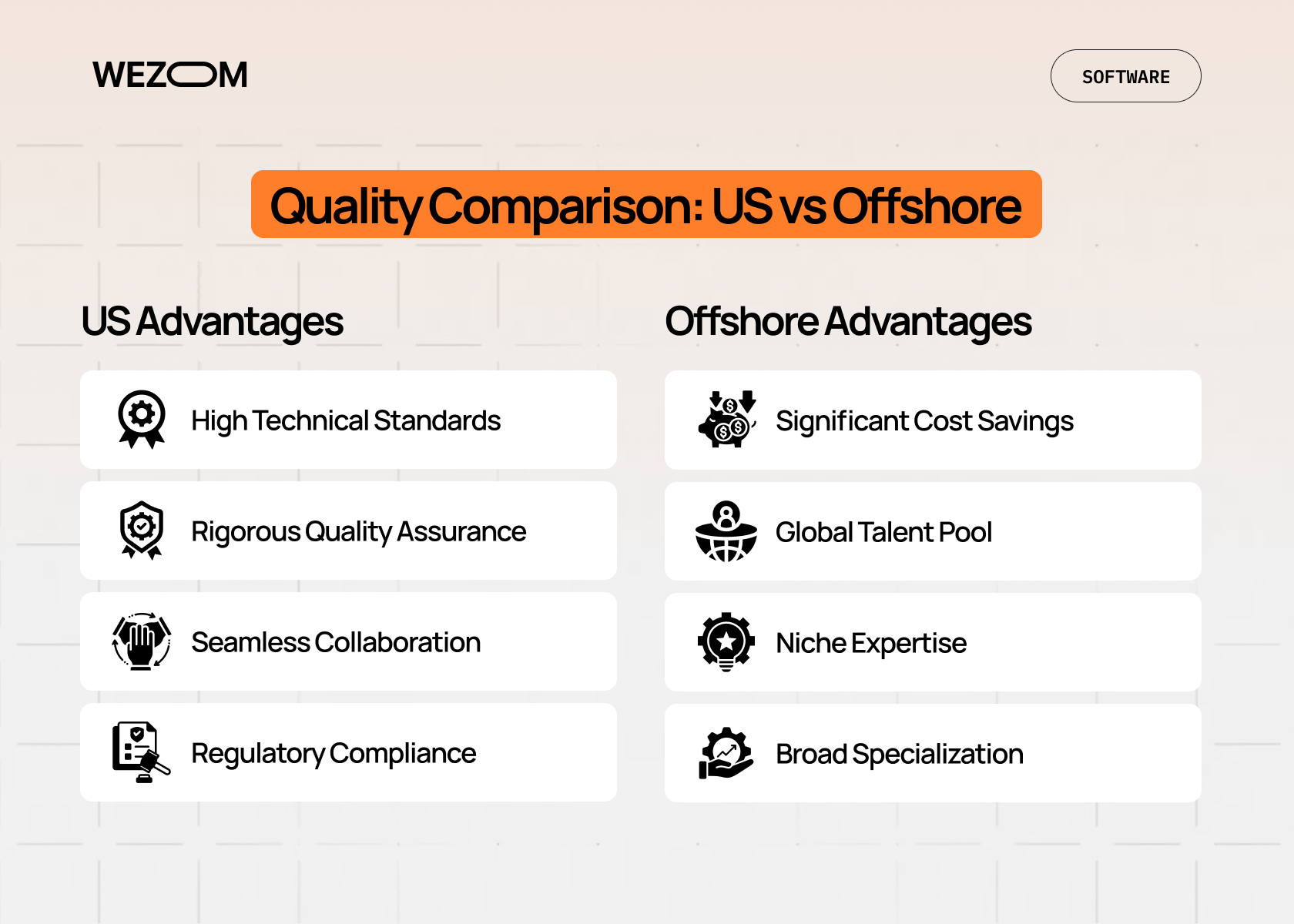
When considering software development, quality is often just as important as cost. The decision to choose between US-based and offshore development should be driven by both the quality expectations and budget limitations of the business.
US Advantages
US-based software development teams are typically known for their high technical standards and rigorous quality assurance processes. US developers are often well-versed in the latest technologies and practices, such as Agile methodologies and cloud development. Additionally, the proximity to clients allows for more seamless real-time communication and easier collaboration.
The quality control processes in the US are generally more standardized, with regular code reviews, testing, and validation, ensuring that the final product meets business requirements. Furthermore, developers in the US are more likely to have in-depth knowledge of local compliance requirements, which is crucial for industries such as finance and healthcare.
Offshore Advantages
Offshore software development presents significant opportunities for businesses to access a broader talent pool, often specializing in technologies such as web development, mobile applications, and basic software solutions. Countries like India, Eastern Europe, and Latin America have developed a robust tech industry, producing highly skilled developers at a fraction of the cost compared to US-based developers.
Offshore markets often offer substantial cost savings, which can allow businesses to allocate their budget to other aspects of the project, such as marketing, infrastructure, or research and development. Moreover, offshore teams can bring unique expertise, especially in specific niches like AI, machine learning, and blockchain.
Potential Offshore Challenges
Despite the benefits, offshore development comes with its own set of challenges. One of the primary issues is time-zone differences, which can result in delays in communication and a slower feedback loop. A project that would take a few days to complete in the US could take weeks when working with offshore teams due to delays in receiving responses.
Additionally, communication gaps can arise from language barriers or cultural differences, potentially resulting in misunderstandings and misaligned project expectations. These factors can contribute to a lower-quality output if not addressed properly. Offshore developers may also have different quality standards or less experience with advanced tools and frameworks, leading to variable code quality.
Factors Affecting Quality
Several factors impact the quality of software development, whether in the US or offshore. Understanding these factors helps businesses make more informed decisions.
Technical Expertise and Specialization
The technical expertise of developers is crucial to quality. US-based teams often have deep knowledge of advanced technologies like AI, cloud computing, and large-scale enterprise solutions. Offshore teams, particularly in Eastern Europe and India, specialize in web and mobile development, offering lower-cost alternatives. However, specialized skills may vary by region.
Code Quality, Documentation, and Testing Standards
US teams follow strict coding standards and maintain robust documentation, testing, and code reviews, ensuring scalability and maintainability. Offshore teams, though skilled, may have varying documentation and quality assurance standards, which could lead to challenges in future updates or product scaling.
Methodology: Agile vs Waterfall
US-based teams often use Agile methodologies, emphasizing iterative development, flexibility, and frequent feedback. This allows for continuous adjustments throughout the project. Offshore teams might use the waterfall model, which can limit adaptability when the project’s scope changes, possibly leading to lower quality.
Long-Term Maintainability and Scalability
US developers focus on creating software that is scalable and maintainable, using best practices for version control and modular design. Offshore teams may lack experience with these practices, leading to potential technical debt and challenges with long-term product growth.
Communication and Cultural Alignment
Effective communication is vital. US-based teams often align better with the client’s business culture, ensuring smooth collaboration. Offshore teams may face language barriers or cultural differences, which can result in delays and miscommunications, affecting project quality.
How to Evaluate Offshore Providers
When evaluating offshore software development providers, it is important to assess several factors to ensure that you are selecting the right partner for your project. Here are some key steps to follow during the evaluation process:
Assess Portfolios and References
The first step in evaluating offshore providers is to examine their portfolio and client references. A strong portfolio will showcase their expertise in developing similar products to what you need. Look for evidence of successful projects in your industry or with similar technology stacks. Additionally, ask for references from previous clients to get a sense of their working relationship and the providers’ ability to meet deadlines and deliver quality work.
Trial Projects or MVPs
Before committing to a long-term partnership, consider starting with a trial project or MVP (Minimum Viable Product). This will allow you to assess the provider's capabilities on a smaller scale, ensuring they meet your expectations before moving forward with a larger project. Trial projects can help mitigate the risks associated with offshore development by giving you a clear understanding of the provider's work quality, communication skills, and project management processes.
Tools for Monitoring Performance and Quality
To ensure quality and track progress throughout the project, use tools for monitoring performance. Tools like Jira, Trello, or Asana can help you keep track of tasks, milestones, and deadlines. Additionally, tools such as GitHub or GitLab can help you review code quality, track changes, and collaborate on development.
Comparing Multiple Bids Effectively
When working with offshore teams, it is important to gather multiple bids to compare the scope, pricing, and service offerings of different providers. Look beyond the cost and assess the team's technical capabilities, proposed timelines, and communication strategies. Be wary of low-cost providers that may compromise on quality.
How to Choose the Right Development Approach for Your Project
Choosing the right development approach for your project involves evaluating several factors, including project complexity, budget, timeline, and long-term maintenance needs. Here’s how to match the right approach to your project requirements:
Match Project Complexity and Business Goals with Team Type
The first step is to align your project’s complexity and your business goals with the appropriate team type. For complex, large-scale projects, a US-based team may be preferable, as they are more likely to have the experience needed for intricate enterprise solutions. For simpler projects or those with well-defined requirements, offshore teams may offer a more cost-effective solution.
Consider Budget vs Required Quality: When Offshore Makes Sense and When US-Based Is Preferable
If your primary goal is to minimize costs, offshore development might be the best option. However, if your project requires high-quality standards, real-time communication, or specialized skills, US-based developers may be more suited to your needs. Carefully weigh the trade-off between cost and quality before making your decision.
Evaluate Project Timeline and Need for Real-Time Communication
Consider the project timeline and your need for real-time communication. If your project requires frequent iterations or fast feedback loops, working with a US-based team may be beneficial due to overlapping time zones and proximity. Offshore teams may still be a viable option if you can work around time-zone differences and maintain effective communication through other means.
Assess Long-Term Maintenance and Scalability Requirements
Finally, assess your long-term maintenance and scalability requirements. Offshore teams may be a good choice for short-term projects, but for ongoing support and long-term scalability, US-based teams might provide better reliability, especially when dealing with mission-critical applications.
Conclusion
Choosing between US-based and offshore software development depends on various factors, including budget, project complexity, and quality requirements. Offshore development offers substantial cost savings, but it comes with potential risks related to communication, time-zone differences, and variable quality. On the other hand, US-based development teams provide higher quality and better communication, but at a higher cost.
By understanding the trade-offs and evaluating the factors discussed in this article, businesses can make an informed decision that best fits their specific needs.

FAQ
What are typical offshore software development rates?
Offshore software development rates vary significantly by region. For example:
- India & Southeast Asia: $15 to $50 per hour;
- Eastern Europe: $25 to $75 per hour;
- Latin America: $25 to $70 per hour;
- Western Europe: $60 to $150 per hour;
- North America (US & Canada): $80 to $200 per hour.
How much does software development cost in the US?
In the US, software development costs typically range from $80 to $200 per hour, depending on the complexity of the project and the location of the developers. Larger cities like San Francisco or New York tend to have higher rates due to demand and cost of living.
Is offshore software development cheaper in the long run?
While offshore development offers significant upfront savings, hidden costs such as communication, project management overhead, and revisions can add up over time. Depending on the complexity of the project, these costs may make offshore development less cost-effective in the long run.
Which model offers higher quality: US-based or offshore software development?
US-based development teams generally offer higher quality due to strict technical standards, well-established quality assurance processes, and real-time communication. Offshore teams can also provide high-quality work, but there may be challenges with time-zone delays, communication gaps, and inconsistent coding practices.
How to communicate effectively with offshore teams?
To communicate effectively with offshore teams, establish clear expectations upfront, use collaboration tools (e.g., Slack, Zoom, Jira), and set up regular meetings. It is also important to account for time-zone differences by adjusting work hours to allow for overlap in working hours and ensuring that feedback loops are efficient.
