
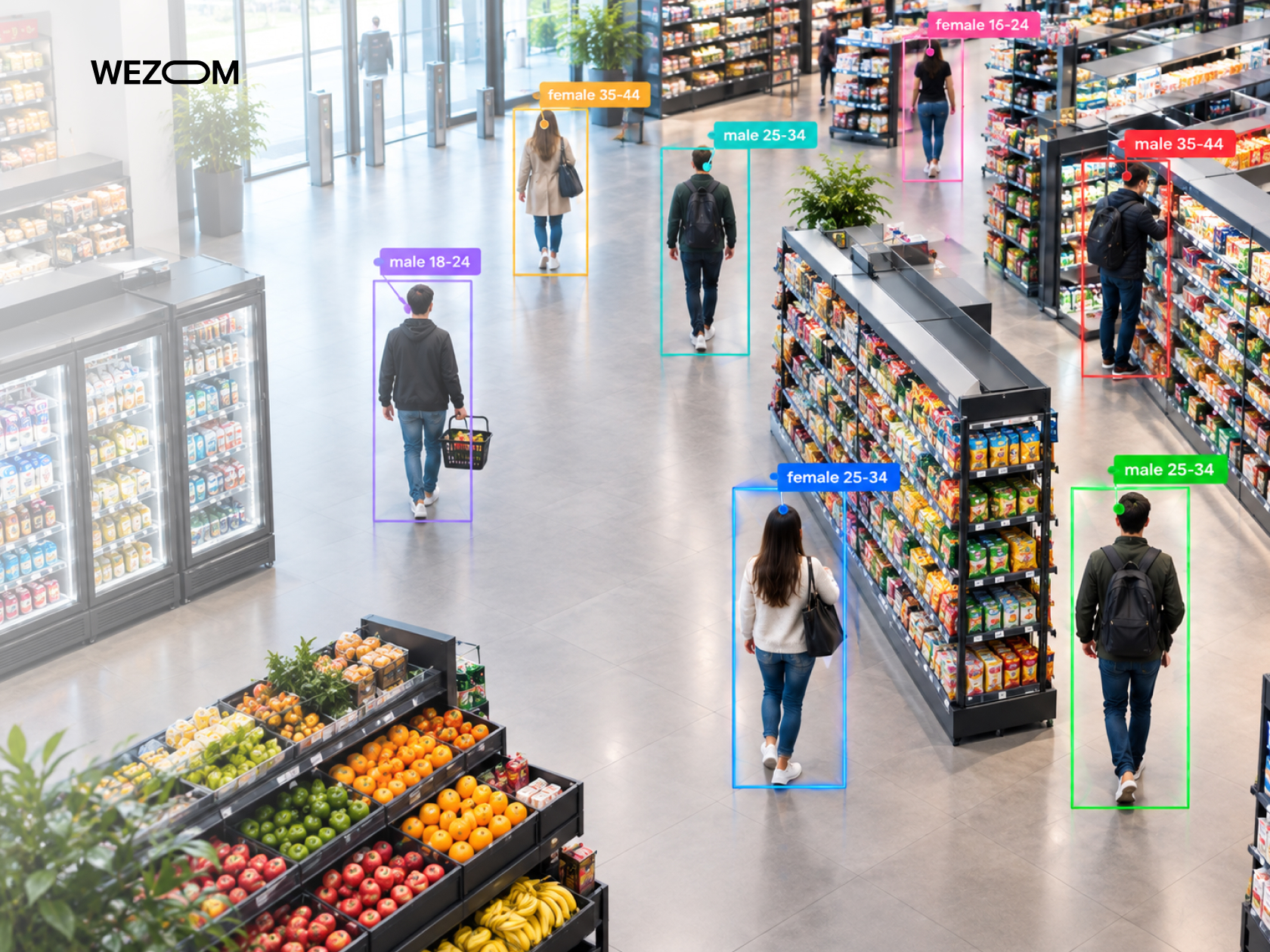
Traditional methods for monitoring physical retail locations (up to infrared counters) are outdated; now, they are being replaced by computer vision solutions that scale the standard capabilities of conventional surveillance cameras. From a business perspective, retailers that implement automated video stream analysis gain the ability to manage demand proactively, resulting in an average traffic-to-sales conversion rate increase of 15-20% within the very first quarter.
How Computer Vision in Retail Transforms Physical Store Operations
For a long time, the digital transformation of offline retail lagged behind online competitors due to the inability to track every customer move and the status of goods in real time. However, with the growing adoption of computer vision, the physical store environment has been transformed into a full-fledged digital platform, bringing with it a host of associated benefits.
What Retail Computer Vision Can Detect from Existing Camera Feeds
Computer vision-based solutions are compatible with the vast majority of modern IP surveillance cameras. This enables the systems to learn how to perform shoplifting detection and product recognition across various categories, check package placement on shelves, monitor customer gaze direction, identify the presence of foreign objects in store aisles, etc. Ultimately, this allows businesses to extract the needed computer vision retail insights without replacing their existing equipment.
From Video Streams to Actionable Retail Insights
A video stream on its own holds little business value until it is processed using edge AI or cloud technologies. Specialized computer vision retail systems can transform gigabytes of video data into business metrics and specific triggers for staff, such as alerting a merchandiser to an empty shelf, notifying security while relying on customer behavior analysis, or, for example, providing store personnel with a report on the popularity of a specific brand zone.
Computer Vision vs Traditional Sensors and Manual Store Monitoring
Compared to conventional motion sensors – and certainly to manual inventory monitoring – computer vision offers scalability and comprehensive capabilities. While manual audits cannot be continuous and remain prone to human error, and RFID requires costly tagging of every single item, computer vision turns out to be more cost-effective for retailers; it captures the product, the shopper, and the interaction between them – all in real time.
Main Computer Vision Retail Use Cases
Computer vision-based solutions in the retail sector can cover almost all business processes. We'll discuss the most in-demand applications below.
Shelf Monitoring and Product Availability
Manually checking for product availability on shelves is extremely resource-intensive; computer vision for shelf monitoring, on the other hand, can handle real-time shelf scanning and instantly detect empty spots to alert staff. Store and warehouse personnel can then quickly restock items, ensuring customers do not leave empty-handed.
Foot Traffic and Customer Movement Analysis
Understanding shopper movement patterns within the sales floor enables retailers to receive actual product placement analytics. More specifically, computer vision-based systems can analyze foot traffic, generate retail heatmaps, identify the most and least attractive zones for shoppers, and more.
Loss Prevention and Suspicious Behavior Detection
Retail loss prevention and theft detection directly impacts business profitability. In this context, computer vision can perform suspicious behavior detection in real time (such as attempts to conceal merchandise in a bag or under clothing, or unauthorized entry into staff-only areas) and alert store security.
Queue Monitoring and Checkout Optimization
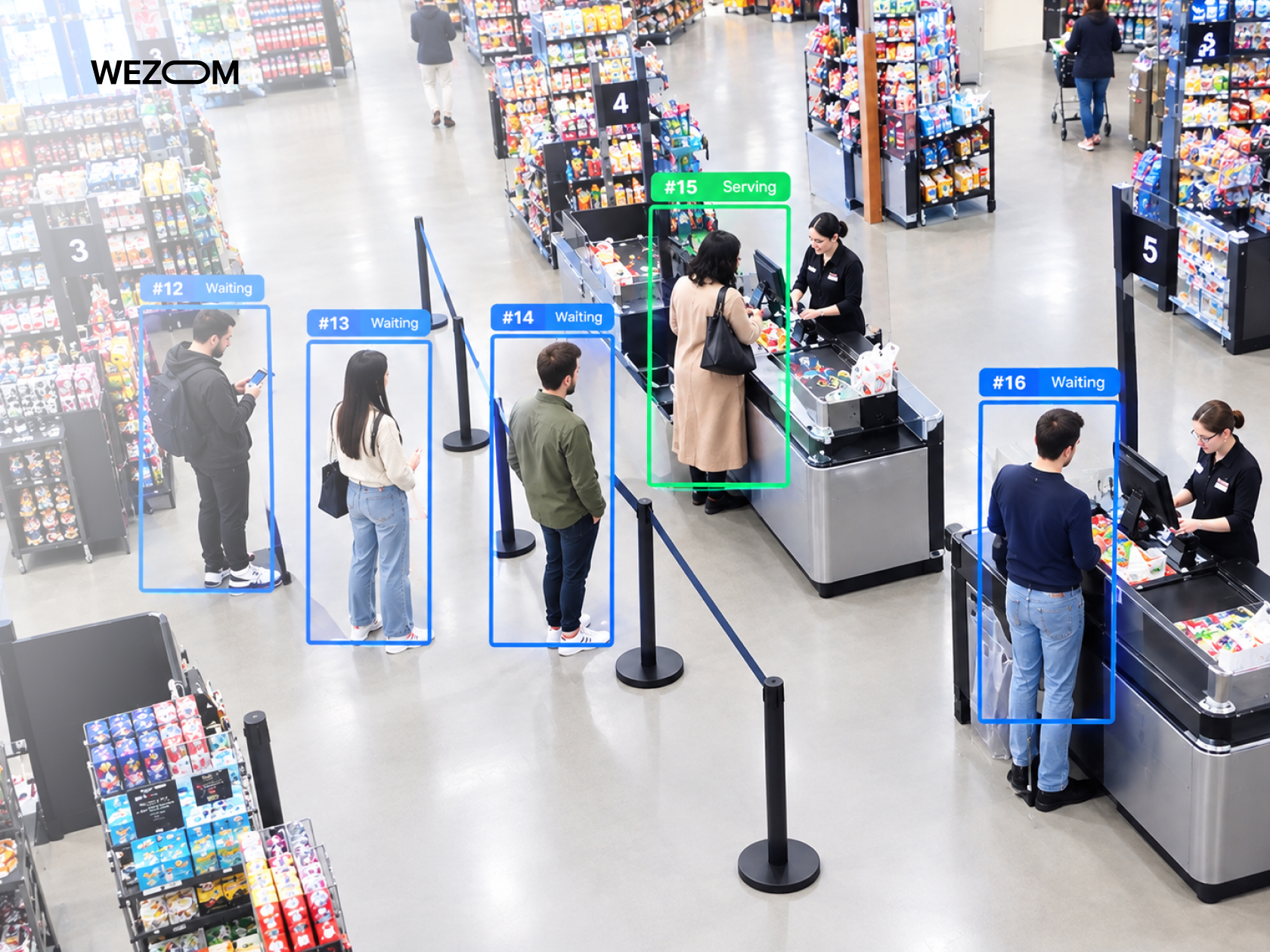
Long lines at checkout counters have a negative impact on customer loyalty. To address the customer journey tracking issue and introduce self-checkout monitoring, computer vision can count the number of people in line and estimate their average wait time. Once the acceptable time limit is exceeded, cashiers receive a signal indicating the need to open additional checkout lanes.
Store Layout and Merchandising Performance
Assessing the effectiveness of store layouts and merchandiser performance is often subject to human perceptions; in contrast, computer vision-based retail data analytics link shopper movements to sales, generating store layout optimization insights to test various arrangements of fixtures and product displays.
Shelf Monitoring with Computer Vision for Retail
The shelf in a brick-and-mortar store is considered the primary interface for retailer-customer interaction; therefore, retail automation is an inevitable step toward modernizing your business through smart retail technology.
Detecting Empty Shelves and Out-of-Stock Products
Empty shelf spaces cause retailers massive losses – simply due to missed sales opportunities. In this context, computer vision can perform out-of-stock detection instantly, even when the front edge of the shelf is cluttered with other products. If such a trigger is detected, the system immediately sends notifications with merchandising analytics, alerting them to the need to bring stock from the warehouse to the sales floor.
Planogram Compliance and Product Placement Monitoring
Supplier agreements often stipulate specific product placement schemes. From this perspective, neural networks can automatically generate optimal planograms (and ensure planogram compliance), identifying deviations regarding brand and category adjacency, product placement height, and other factors.
Identifying Misplaced, Missing, and Incorrectly Faced Products
Shoppers often pick up an item and end up leaving it in a random spot on the shelf. This spoils the display's appearance and makes it difficult for other shoppers to find the products they need. To address this issue, computer vision instantly detects both misplaced products and items that have been returned to the shelf with the wrong side of the packaging facing outward.
Measuring Shelf Share and Competitor Product Visibility
Share of shelf is a main indicator of brand strength at the point of sale. To maximize effectiveness, computer vision systems can calculate the percentage of shelf space allocated to specific brands within the product assortment. This helps retailers ensure compliance with contractual obligations involving distributors and manufacturers.
Connecting Shelf Data with Inventory Management Systems
Inventory system integration implies an instant access to shelf data (here, we mean ERP integration, first of all), as it enables end-to-end automation; for instance, if the system detects the regular disappearance of an item from the shelf despite available warehouse stock, this serves as an indicator of internal operational failures or theft.
Computer Vision Retail Analytics for Foot Traffic
Store traffic monitoring is critically important, so it makes sense for retailers to implement smart solutions based on computer vision to assess core marketing metrics.
People Counting and Store Traffic Measurement
Counting incoming and outgoing visitors eliminates the inaccuracies associated with obsolete sensors, which also register store staff, shopping carts, and random passersby. This provides an accurate foot traffic analytics baseline for evaluating the performance of each retail location.
Heatmaps and High-Traffic Zone Analysis
Traffic intensity heatmaps help businesses assess the popularity of different store sections. Our experience shows that effective heatmap analysis enables the placement of high-margin products in areas with the highest customer traffic, ultimately increasing the average transaction value.
Customer Journey and Path-to-Purchase Tracking
Analyzing customer paths from the entrance to the checkout area illustrates the logic of consumer behavior. This allows retailers to obtain physical store analytics which displays attract the most interest from visitors and which parts of the route are most frequently overlooked.
Dwell Time and Engagement Around Products and Displays
Dwell time at a specific display indicates the effectiveness of advertising campaigns. In other words, if a product display attracts attention but shoppers linger there for less than a second, it is a clear sign that the layout design or the way information is presented needs to be changed.
Comparing Footfall, Conversion Rates, and Store Performance
Comparing inbound traffic data with transaction data obtained through POS integration enables retailers to assess conversion analytics, taking into account the day of the week and current promotions. This allows them to identify their most productive operating hours.
Turning Computer Vision Retail Insights Into Merchandising Decisions
Merchandising in brick-and-mortar stores must rely solely on objective metrics regarding shopper behavior at each product shelf.
Identifying High-Performing Store Zones
Customer traffic analytics makes it possible to pinpoint areas with the highest commercial return, ultimately providing insights for reallocating retail space (based on heat maps) and boosting product sales by 18-25%.
Measuring Promotional Display Effectiveness
Investing in branded pallets requires measuring not so much the number of passersby as the number of people who actually stopped and examined the product in detail – something neural networks handle exceptionally well.
Optimizing Product Placement Using Behavioral Data
Linking dwell time to sales receipts helps manage product display heights. This means that items placed at eye level will finally start generating maximum profit.
Evaluating Changes To Store Layout and Merchandising Strategy
Linking dwell time to sales receipts helps manage product display heights. This means that items placed at eye level will finally start generating maximum profit.
Computer Vision for Retail Loss Prevention
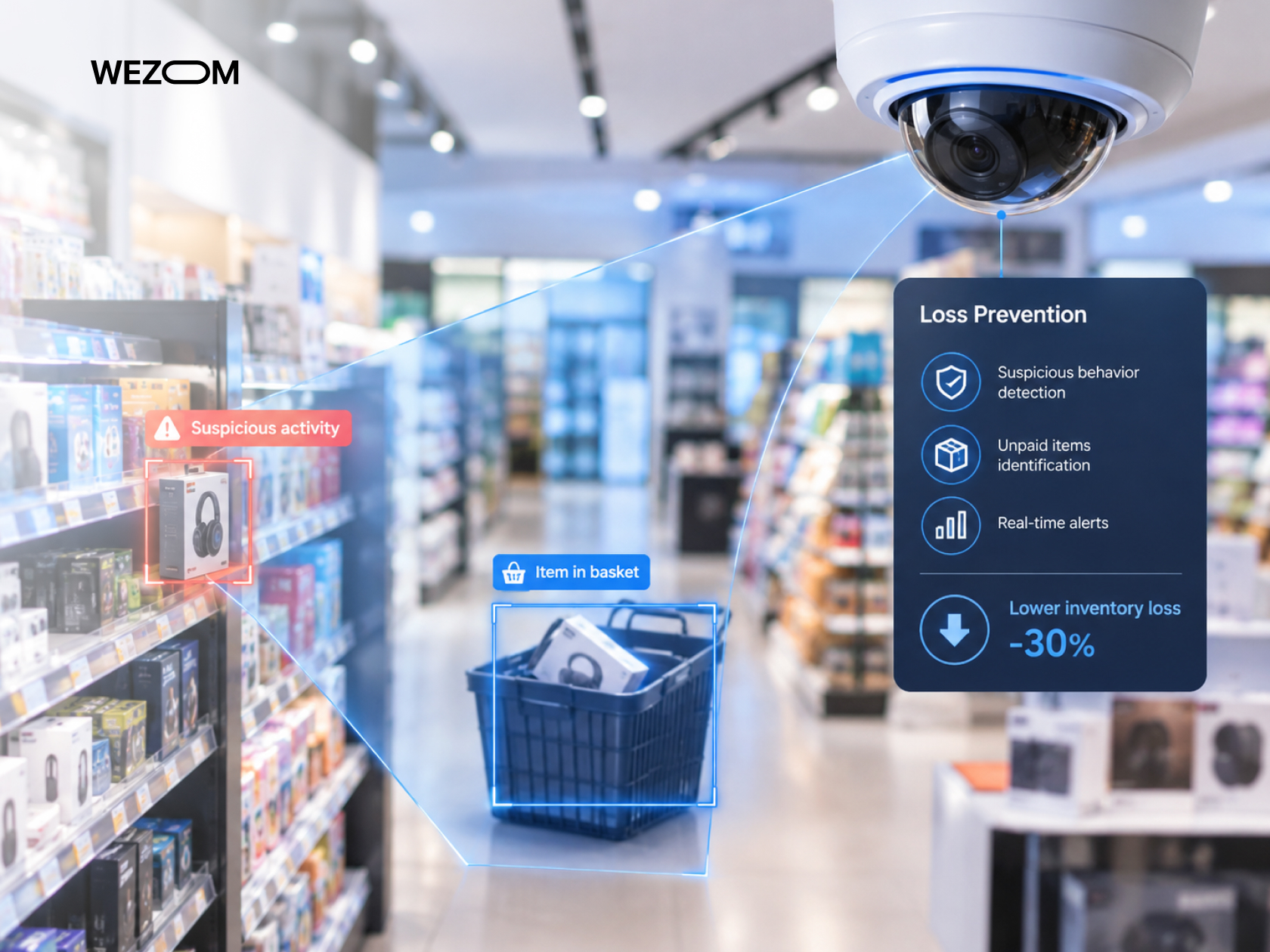
Reducing inventory losses is another factor determining the return on investment for video analytics systems.
Detecting Potential Shoplifting Behavior
Algorithms can detect attempts to conceal merchandise, suspicious interactions with packaging in blind spots, unusual maneuvers near the checkout area, and so on.
Identifying Unusual Activity Around Shelves and Exits
Fumbling for a long time at the shelving units in the pallet storage area or a crowd of shoppers gathering near the emergency exits – these are the things that trigger the system to summon security.
Self-Checkout Monitoring and Scan Avoidance Detection
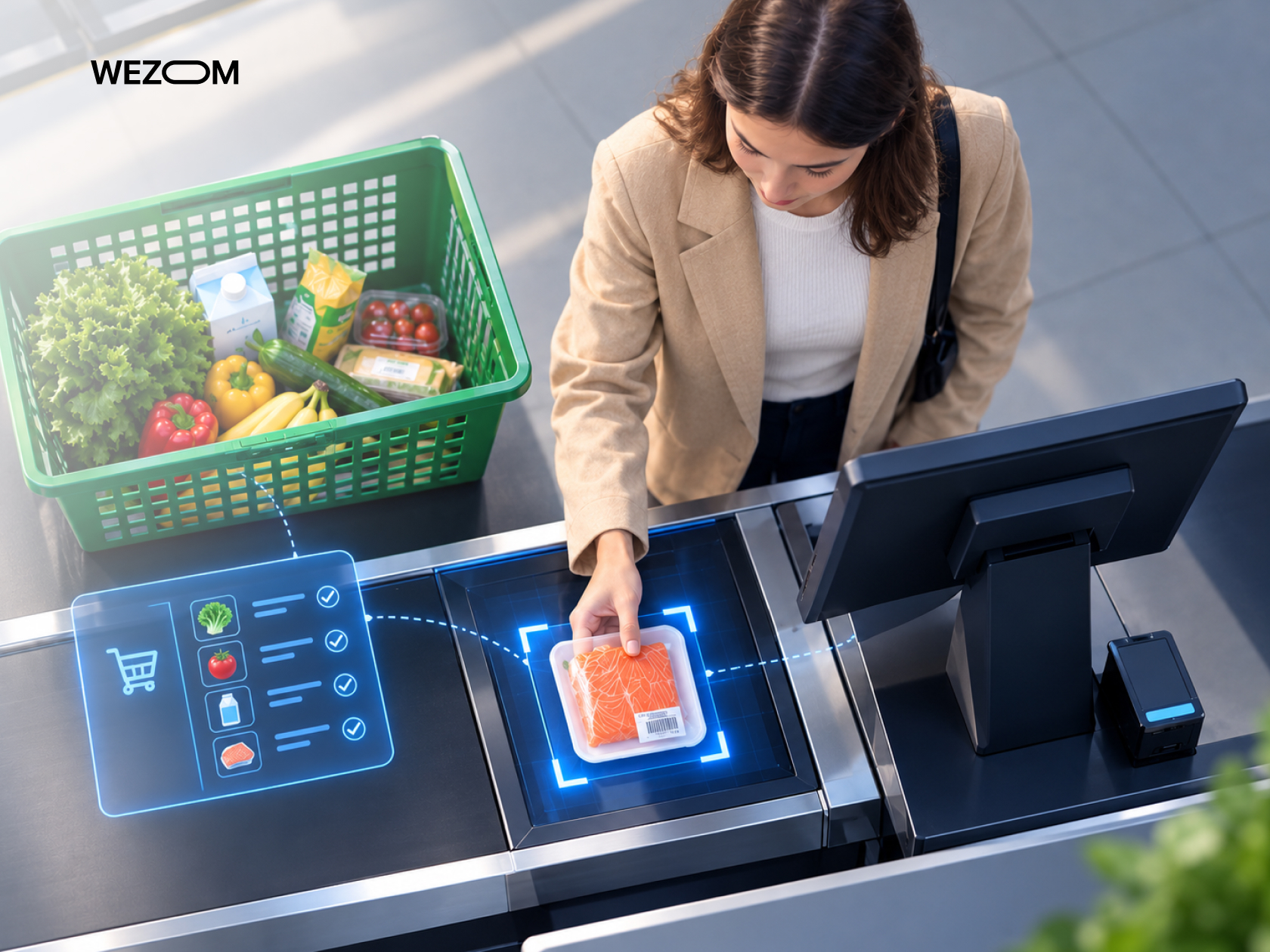
Self-checkout areas are vulnerable to unscanned items and barcode swapping; therefore, to prevent these issues, computer vision can match the items passed through the scanner with those the customer is bagging.
Employee-Related Loss and Operational Anomalies
Monitoring of point-of-sale transactions (including receipt cancellations, returns, unauthorized discounts, and the like) is handled automatically by the systems to prevent staff fraud.
Reducing False Alerts with AI-based Video Analytics
Neural networks minimize security false alarms by independently distinguishing attempts to steal merchandise from accidentally dropped packaging or shelf restocking by a merchandiser.
Computer Vision at Checkout and Service Areas
Checkout areas are crucial touchpoints in the customer experience, where shoppers decide whether or not they want to return to the store.
Queue Length and Waiting-Time Detection
The systems are capable of estimating in real time the length of queues and the waiting time of each person before paying for their purchases.
Predicting When Additional Checkout Lanes Are Needed
Using customer traffic analysis, the system can predict a surge in workload in advance (for example, a few minutes before a crowd forms) and notify cashiers ahead of time.
Monitoring Self-Checkout Stations
The self-service zone monitoring integrated into the vast majority of advanced intelligent solutions makes it possible to identify customers experiencing difficulties with payment or item scanning.
Improving Staff Allocation Based on Real-Time Store Traffic
Finally, many solutions feature the dynamic reallocation of staff from back-office areas to the sales floor; to achieve this, they gather shopper behavior analytics and help optimize labor costs.
How a Retail Computer Vision System Works
The architecture of smart retail solutions must combine reliable hardware with deep neural networks.
Cameras, Edge Devices, and Cloud Infrastructure
These solutions are based on interconnected local computing modules (so-called edge devices) and cloud servers. This architecture ensures high fault tolerance, even with an unstable internet connection.
Object Detection, Tracking, and Classification models
The most basic algorithms handle object detection, tracking, and categorization (for example, distinguishing between a product, a person, and a cart).
Pose Estimation and Behavioral Event Detection
Pose estimation, integrated into the vast majority of solutions, automatically detects leaning, gestures directed at shelves or specific products, as well as suspicious or confrontational visitor behavior.
Real-Time Video Processing vs Batch Analytics
Such software requires splitting tasks into real-time video analytics (needed for critical triggers) and heavy batch analytics (required for reporting). This reduces the load on the network.
Turning Visual Events into Dashboards and Alerts
The software must be capable of converting all recognized events into dashboards featuring insights for senior management and push notifications for store staff.
Integrating Computer Vision with the Retail Technology Stack
Maximum business benefit from implementing computer vision is achieved only through its seamless integration with the company's existing software.
POS and Transaction Data Integration
This is necessary to correlate data from cameras with POS terminal receipts – this way, your marketers can evaluate conversion rates and scanning accuracy.
Inventory, ERP, and Warehouse Management Systems
Linking on-shelf product analytics with your ERP system will enable you to automate orders to suppliers when stock runs low.
Business Intelligence and Retail Analytics Platforms
Integration with BI solutions will allow you to combine offline metrics with the retailer's KPIs.
Store Management Dashboards and Notification Systems
Integration with messaging apps and SMS services enables your store staff to receive urgent alerts the moment a specific trigger is activated in the system (e.g., suspicious visitor behavior, shelf gaps, excessively long checkout lines, etc.).
APIs for Connecting Computer Vision with Existing Software
Open APIs will allow you to integrate computer vision modules into any existing, approved IT infrastructure.
Edge AI vs Cloud Processing for Computer Vision Retail Analytics
The choice of data processing method determines the system's total cost of ownership and reveals its scalability potential.
When Edge Processing Makes Sense in Physical Stores
Edge-based data processing is optimal where minimal latency is critical (such as for loss prevention, visitor conflict detection, etc.).
Latency, Bandwidth, and Infrastructure Requirements
Moving computation to the network edge can also simplify bandwidth requirements and protect customers' personal data.
Cloud Scalability for Multi-Store Retail Networks
Cloud infrastructure is optimal for data aggregation, model training, and generating unified reports.
Hybrid Computer Vision Architectures
A hybrid approach entails a combination of local mini-servers (in each store) and the cloud for complex store operations analytics.
Data Privacy and Security in Retail Computer Vision
Ensuring visitor privacy at physical points of sale (for example, in compliance with GDPR) is a factor that must be considered before implementing even the simplest version of camera analytics.
Anonymous Analytics vs Customer Identification
Retail is not a sector that requires tracking specific individuals; that is why computer vision solutions should be designed from the outset for privacy-preserving analytics (capturing anonymized movement paths, counting visitors, analyzing behavior, and so on), providing everything a business needs without storing biometric data.
Video Retention and Personal Data Considerations
Storage conditions for video footage must be regulated; for instance, raw video streams from cameras should either be deleted after a certain period or anonymized on edge devices into mathematical metrics, without archiving video containing identifiable individuals.
Facial Recognition Risks in Physical Retail
True facial recognition in mass-market retail is unacceptable; systems should employ silhouette tracking and motion pattern detection, without identifying individual visitors by their faces.
Access Control and Secure Video Infrastructure
Protecting video streams from unauthorized access requires end-to-end encryption during both transmission and storage; it is also important to segregate access rights for store employees, managers, and software vendors.
Designing Privacy-Conscious Computer Vision Systems
Development according to Privacy by Design principles entails a number of architectural constraints, such as blurring faces directly on capture devices, storing only metadata, deleting identifiers after reports are generated, and so on.
Main Metrics Retailers Can Track with Computer Vision
Computer vision streamlines the operations of physical stores by reducing the human factor and manual processes.
Footfall and Visitor Counts
Round-the-clock counting of people entering and exiting provides excellent insights for evaluating KPIs that are important to a specific business.
Dwell Time and Zone Engagement
Measuring the time shoppers spend at store windows allows merchandisers to gauge the target audience's interest in specific product categories and promotions.
Shelf Availability and Out-of-Stock Rate
24/7 shelf monitoring enables the timely identification of gaps and the absence of high-demand items in the product assortment.
Queue Length and Checkout Waiting Time
Wait time and queue monitoring at the checkout prevents customer churn caused by frustrated shoppers.
Loss Prevention Incidents and Alert Accuracy
Estimating the number of security sensor activations allows retailers to reduce the rate of false alarms through computer-vision-based double-checking. This also has a positive impact on the return on investment for security systems.
Traffic-to-Purchase Conversion
Linking the number of people entering the store to the number of processed transactions allows store owners to determine the conversion funnel.
Challenges of Implementing Computer Vision in Physical Stores
Deploying computer vision algorithms in retail outlets presents a number of challenges that need to be taken into account.
Camera Placement and Blind Spots
The first challenge is the improper placement of video surveillance equipment or the obstruction of the field of view by tall shelving units. This creates blind spots, which negatively affects the accuracy of store performance analytics.
Lighting, Occlusion, and Crowded Environments
A second challenge involves potential glare from lighting, harsh shadows, shopper congestion during peak hours, people obscuring one another, and other forms of "interference." Despite the inherently high accuracy of computer vision-based solutions, these factors still negatively impact tracking efficiency.
Model Accuracy Across Different Store Formats
A neural network trained on small neighborhood supermarkets may prove ineffective in hypermarkets or, for instance, stores with narrow aisles (it all comes down to product display methods and the layout of the premises).
Integration with Legacy Retail Systems
Integrating computer vision software with legacy cash registers and ERP systems requires additional middleware, such as data gateways (which complicates and prolongs the development process).
Scaling Computer Vision Across Hundreds of Locations
Scaling a pilot project across hundreds of retail outlets of varying sizes often runs up against communication bandwidth limitations and the need to establish an additional centralized hub for hardware administration.
How to Implement Computer Vision for Retail
The successful launch of a retail computer vision solution requires a phased approach.
Define Business Problems Before Selecting AI Models
First, you need to define your business pain points (such as performing queue length detection or eliminating the issue of empty retail shelves), after which your technical team selects the optimal neural network architecture.
Audit Existing Camera and Network Infrastructure
Now, you need to analyze the technical specifications of your existing fleet of IP cameras. It is essential to consider the resolution of these computer vision cameras, maximum field of view, local network bandwidth, and the physical placement of the devices.
Prepare and Label Retail-Specific Visual Data
This stage involves creating a dataset from scratch (or optimizing an existing one) containing annotations of product groups, packaging, store displays, and shopper behavior patterns, providing the necessary data to fine-tune models for your specific workflows.
Build and Validate a Proof of Concept
Next, you need to organize a pilot implementation at one or two physical retail locations. This will allow you to evaluate the algorithms' accuracy in a real-world setting (that is, directly within an active sales floor).
Integrate Analytics into Store Workflows
At this stage, you will already have some results from the implemented system. These need to be integrated with employees' mobile apps and your IT infrastructure, as well as incorporated into your staff's workflows and procedures.
Measure Accuracy, ROI, and Operational Impact
After all this, you will be able to conduct an end-to-end assessment of the return on investment from implementing the innovative solution, determine the extent to which employee response speed has improved, and see whether sales have increased overall.
Scale from a Pilot Store to a Retail Network
Once you have realized that the pilot version has proven its worth, you can proceed to scale the hardware-software system across the retailer's entire network.
Custom Computer Vision vs Ready-Made Retail Analytics Platforms
The choice between an off-the-shelf retail AI product and a custom one depends less on budget and more on the system's overall flexibility.
When an Off-the-Shelf Solution Is Sufficient
Off-the-shelf platforms are generally optimal for standard tasks such as people counting or shoppers, creating heatmaps, generating foot-traffic reports, and so on.
When Retailers Need Custom Computer Vision Development
Custom introduction of computer vision for retail is essential if your store layouts are unique, your retail locations and warehouses have non-standard architecture, or your workflows deviate significantly from the norm.
Comparing Implementation Flexibility and Integration Options
While off-the-shelf computer vision solutions are faster to deploy, they often face significant limitations regarding customization and integration; conversely, custom software can be tailored from the start to your existing tech stack and modified however the business requires.
Long-Term Scalability and Ownership Considerations
Custom development eliminates vendor lock-in and ensures full protection of your business's intellectual property – a strategy that can prove highly advantageous in the long run.
Where Retail Computer Vision Delivers the Most Business Value
The effectiveness of computer vision in retail is determined by the specifics of product categories and, more broadly, by the business model itself.
Grocery and Supermarket Chains
In food retail, the greatest value is derived from real-time monitoring of emptying shelves, managing the freshness of product displays, and minimizing losses of perishable goods.
Fashion and Apparel Stores
In clothing stores, main performance indicators include foot traffic and time spent in fitting rooms, as well as cross-analysis of customer movement.
Electronics Retailers
For retail digital transformation in this niche, it is crucial to closely monitor the security of merchandise on display (i.e., preventing theft and damage to gadgets) and to conduct end-to-end analysis of customer interactions with the device models that interest them.
Convenience Stores
In stores located near residential complexes, it is important to focus on preventing queue build-up, ensuring the ability to quickly summon staff, and maintaining control over the checkout areas (thanks to real-time checkout analytics).
Pharmacies and Health Retail
Pharmacy retailers stand to benefit from computer vision retail analytics by ensuring adherence to pharmaceutical product planograms and rigorously monitoring shelf-life and display timelines.
Large-Format and Warehouse Retail
In hypermarkets and wholesale warehouses, AI video analytics can ensure the safety of loading zones, optimize trolley management, and improve overall facility logistics.
FAQ
Can computer vision work with existing CCTV cameras?
Yes, visual AI solutions can connect to IP surveillance cameras already installed in the store; the main requirement is that their resolution and field of view meet the software's specifications.
How accurate is computer vision for retail analytics?
The AI model accuracy for product detection and traffic counting in advanced solutions typically reaches 95-99%, significantly outperforming manual audits and even infrared sensors.
Does retail computer vision require facial recognition?
No, facial recognition is not required for basic in-store analytics tasks, (like introducing object tracking and footfall analytics, generating heatmaps, as well as implementing shelf availability monitoring and dwell time analysis). So, video anonymization is not needed.
How many cameras are needed for computer vision in a store?
It all depends on the sales floor area, shelving layout, and specific business objectives. Based on our experience in AI-powered surveillance, adequate coverage of the sales floor and checkout areas requires between 4 and 15 video surveillance cameras.
Can computer vision detect theft before a customer leaves the store?
Yes, computer vision in retail can perform object detection (actually, suspicious handling of products by store visitors) and send real-time alerts to security personnel.
How much data is required to train a custom retail computer vision model?
Training machine learning for retail for specific products typically requires from a few hundred to a few thousand correctly labeled images of their packaging taken from various angles.
Can computer vision analytics work without sending video to the cloud?
Yes, this is achievable through an edge video analytics architecture, where all initial video processing and actual event detection take place directly on a mini-server within the store (only text-based metadata is sent to the cloud for in-depth retail video analytics).
How long does it take to deploy computer vision across multiple stores?
A pilot launch at a single retail location takes an average of 2-4 weeks. As for introducing multi-store analytics for hundreds of locations, it usually takes several months (much depends here on the initial readiness of the IT infrastructure).
