
Choosing between building an internal engineering team and partnering with a drone software development company is a strategic decision that directly affects project cost, delivery speed, software quality, regulatory readiness, and future scalability.
Drone software projects are more complex than traditional application development because they combine multiple technology layers, including UAV communication, firmware, autopilot systems, telemetry, navigation, sensors, AI, computer vision, geospatial data processing, and cloud infrastructure. A successful solution requires not only software development expertise but also an understanding of aviation requirements, hardware limitations, security risks, and enterprise integration needs.
Building an in-house team provides maximum control and long-term ownership but requires significant investment in hiring, infrastructure, technical leadership, and continuous knowledge development. Finding specialists in embedded systems, machine learning, GIS, and drone technologies can be challenging and may slow down product delivery.
A drone software company offers faster access to specialized expertise and established development processes. This approach can help organizations launch MVPs, modernize existing systems, or scale drone initiatives without creating a large permanent engineering department. However, choosing the right partner requires careful evaluation of technical experience, security practices, and industry knowledge.
Understanding the differences between a drone software development company vs. an in-house team helps businesses select a development model that aligns with their goals, available resources, and long-term technology strategy.
Drone Software Development Company vs In-House Team: Side-by-Side Comparison
The choice between an internal engineering department and external drone specialists affects almost every stage of software development, from initial planning to post-launch maintenance. While an in-house team provides direct organizational control, a specialized development partner offers faster access to a wider range of technical capabilities.
Drone software development requires expertise across several domains simultaneously. A typical project may involve UAV communication protocols, autopilot integration, telemetry processing, embedded firmware, mobile applications, backend systems, AI-powered analytics, mapping platforms, and cloud-based data management. Building all these capabilities internally requires not only hiring individual specialists but also creating an environment where they can effectively collaborate.
An internal team often becomes attractive for organizations with continuous research and development needs. Companies developing proprietary aviation technologies or operating large-scale drone programs may benefit from having dedicated engineers who deeply understand internal processes, hardware platforms, and long-term product strategy.
However, the initial investment can be substantial. Recruiting experienced engineers in areas such as embedded systems, computer vision, machine learning, and aviation software is highly competitive. Organizations may spend months building a team before meaningful development begins. In addition, maintaining expertise requires ongoing training as UAV technologies, regulations, and development frameworks continue changing.
A drone software company provides an alternative approach by offering access to an already established engineering environment. Instead of creating a complete team from the beginning, businesses can engage specialists who already understand drone ecosystems, software architecture patterns, testing approaches, and integration challenges.
This approach is particularly valuable for organizations that need to validate an idea, launch an MVP, or expand existing systems without committing to permanent hiring. External teams can provide specialized knowledge during specific project stages, such as developing AI-based inspection systems, integrating LiDAR data processing, creating GIS platforms, or modernizing legacy drone software.
However, outsourcing does not eliminate the need for careful planning. The quality of results depends heavily on selecting a partner with relevant technical experience, transparent communication processes, strong cybersecurity practices, and a clear understanding of business objectives.
The following comparison highlights the main differences between these two approaches:
| Factor | Drone Software Development Company | In-House Team |
|---|---|---|
| Initial investment | Lower upfront cost because infrastructure and specialists already exist | High investment in hiring, tools, management, and infrastructure |
| Hiring costs | Minimal internal recruitment required | Requires sourcing and retaining specialized engineers |
| Time to start development | Faster access to ready specialists | Longer preparation period before development begins |
| Drone expertise | Access to experienced UAV specialists | Expertise must be built internally |
| AI and computer vision | Usually available through specialized engineers | Requires recruiting ML and vision specialists |
| Embedded development | Access to firmware and hardware integration experience | Requires dedicated embedded engineers |
| Regulatory knowledge | Can leverage previous aviation-related experience | Must develop internally |
| Scalability | Teams can expand according to project needs | Growth depends on hiring capacity |
| Flexibility | Easier to adjust team composition | Changes require internal restructuring |
| Communication | Requires effective collaboration processes | Direct communication within organization |
| Infrastructure | Development environment already established | Company must build tooling and processes |
| Maintenance | Often available through support agreements | Fully managed internally |
| Long-term ownership | Requires clear documentation and knowledge transfer | Full internal ownership |
| Security | Depends on vendor practices and agreements | Direct internal control |
| Risk level | Reduced technical hiring risk but requires vendor evaluation | Higher recruitment and knowledge risks |
The best option depends on business priorities. Organizations focused on speed, experimentation, and access to specialized expertise often benefit from working with drone software companies. Companies with long-term proprietary technology strategies may prefer internal engineering capabilities or a hybrid model combining both approaches.
Expertise You Need for Drone Software Projects
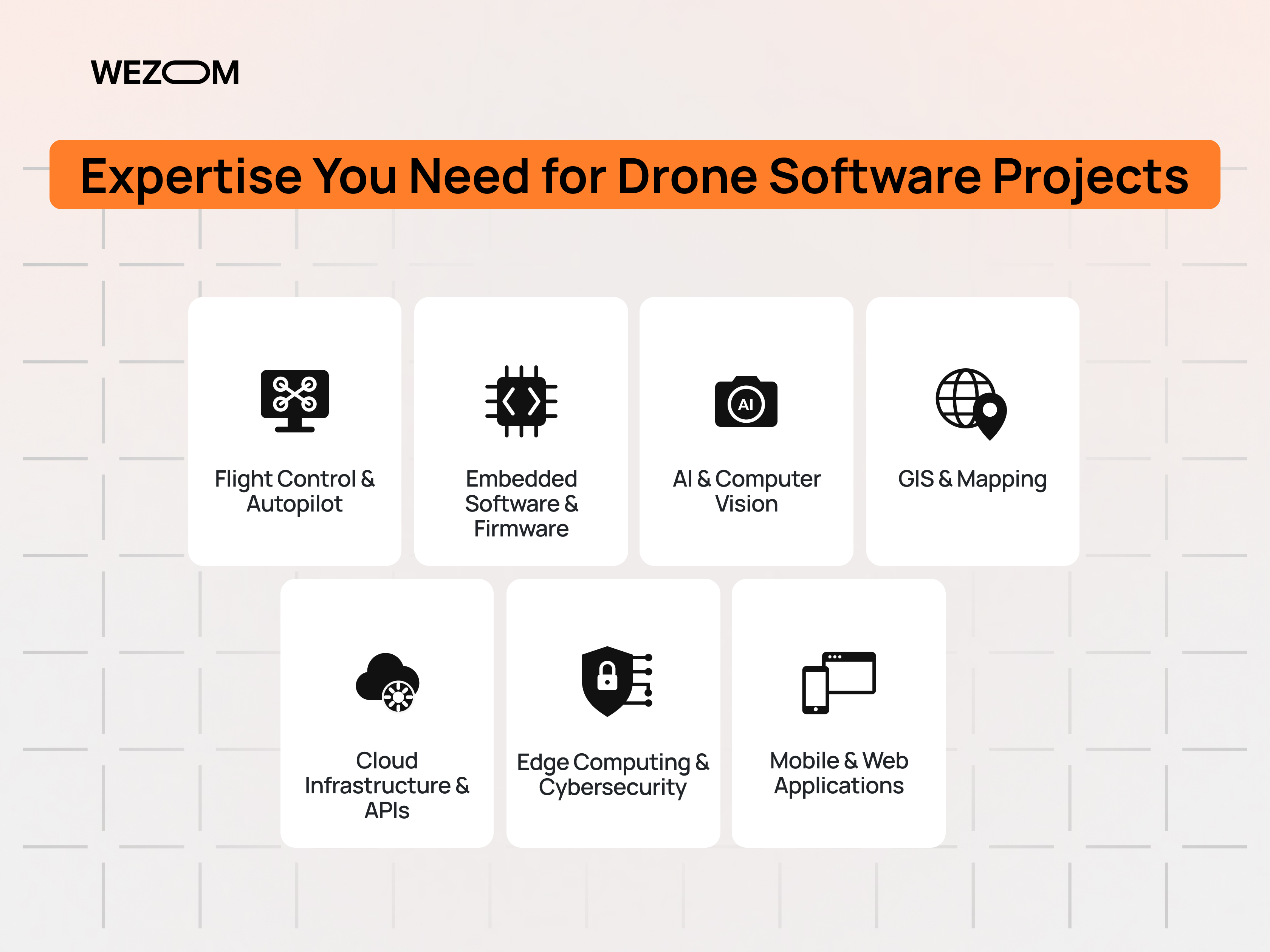
Drone software development requires expertise across multiple technical domains because UAV solutions combine hardware, software, data processing, and real-time communication. Unlike standard applications, drone platforms must operate reliably in complex environments while handling flight data, sensor information, automation workflows, and enterprise integrations.
A successful project typically requires specialists who understand both software engineering and aviation-related technologies. The exact team composition depends on the use case, but most enterprise drone solutions involve several key areas:
- Flight control and autopilot systems — engineers must understand UAV communication, navigation logic, telemetry processing, and integration with flight controllers to ensure stable and reliable operations.
- Embedded software and firmware — low-level development is required to connect software with sensors, controllers, GPS, RTK, LiDAR, and other hardware components.
- AI and computer vision — machine learning specialists help build solutions for object detection, automated inspection, image analysis, and intelligent decision-making.
- GIS and mapping technologies — geospatial expertise enables processing of aerial data, creating maps, and integrating location-based analytics into business workflows.
- Cloud infrastructure and APIs — backend engineers design scalable platforms for storing, processing, and sharing drone data with enterprise systems.
- Edge computing and cybersecurity — specialists optimize software performance on drone hardware while protecting communication channels and sensitive operational data.
- Mobile and web applications — developers create interfaces for operators, managers, and enterprise users who interact with drone platforms.
Because drone projects require such a wide combination of skills, many companies choose to work with a drone software development company to access multidisciplinary expertise without building a complete internal team from scratch.
Scalability and Team Growth
Scaling a drone software project requires more than simply adding developers. As UAV solutions evolve, companies need to expand technical capabilities, support new drone platforms, integrate additional features, and maintain reliable operations across different environments.
Building an internal team allows organizations to keep full control over product knowledge and development decisions. However, scaling can be challenging because experienced specialists in areas such as embedded systems, AI, computer vision, and aviation software are limited in the market. Hiring delays, onboarding time, and employee retention can slow down project growth.
A drone software development company provides more flexibility by allowing businesses to adjust team capacity according to current needs. Organizations can add specific specialists for different stages of development, such as:
- Adding developers — expanding engineering capacity without long recruitment cycles.
- Replacing specialists — reducing dependency on individual employees and maintaining project continuity.
- Supporting multiple projects — managing parallel initiatives such as inspection platforms, mapping solutions, or analytics systems.
- Expanding internationally — adapting solutions for different markets, regulations, and operational requirements.
- Maintaining several drone platforms — supporting different hardware configurations, sensors, and software environments.
- Adapting to business changes — quickly adding expertise in AI, automation, cloud systems, or integrations when priorities change.
Long-term scalability also depends on architecture quality, documentation, testing processes, and maintenance capabilities. A development model should support not only the initial launch but also future improvements, security updates, and enterprise deployments.
For many organizations, a flexible collaboration model with external experts helps balance speed, technical quality, and cost efficiency while keeping the ability to scale as the drone ecosystem grows.
Risk Assessment: Hidden Challenges of Each Approach
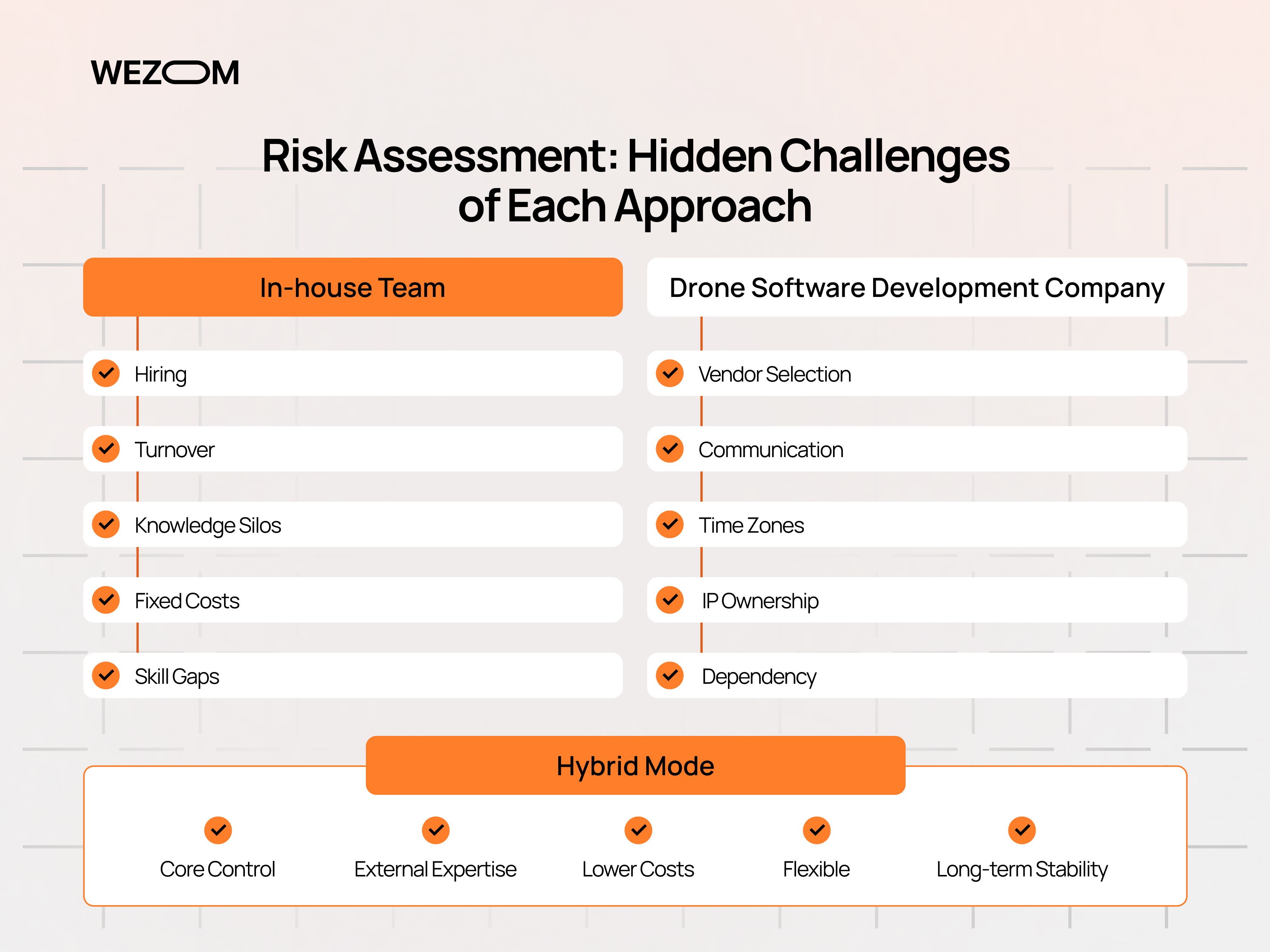
Choosing a development model for drone software requires understanding the risks associated with both internal teams and external partners. UAV projects combine complex technologies such as embedded systems, AI, telemetry, sensors, cloud platforms, and regulatory requirements, meaning poor planning can increase costs and delay delivery.
An in-house team provides full control over development but creates several operational challenges:
- Hiring delays — finding specialists in drone technologies, firmware, computer vision, and AI can take significant time.
- Employee turnover — losing key engineers may result in knowledge gaps and slow down development.
- Knowledge silos — separate teams may struggle to integrate hardware, software, and data processing components effectively.
- High fixed costs — companies must continuously invest in salaries, infrastructure, tools, and training.
- Skill shortages and technology gaps — internal teams need ongoing education to keep up with changing UAV technologies and industry standards.
Working with a drone software development company reduces some internal challenges but introduces different risks:
- Vendor selection — not every software provider has real experience with UAV systems, embedded development, or aviation requirements.
- Communication issues — unclear requirements or weak collaboration processes can affect project outcomes.
- Time zone differences — distributed teams require structured communication and documentation practices.
- IP ownership — contracts must clearly define ownership of source code, algorithms, and project assets.
- Dependency risks — companies should ensure proper documentation and knowledge transfer to avoid relying entirely on one partner.
The right approach depends on business goals, available resources, and project complexity. Organizations with strong engineering capabilities and long-term R&D plans may prefer internal teams, while companies focused on faster delivery and specialized expertise often benefit from external partners.Ahybrid model can help combine internal control with external technical capabilities.
When an In-House Team Is the Better Choice
Building an internal drone software team can be the right choice for organizations where UAV technology is a core strategic capability rather than a one-time project. Companies investing in continuous research, proprietary solutions, or long-term innovation may benefit from having dedicated engineers who fully understand internal goals and product requirements.
An in-house approach is often suitable for:
- Continuous R&D — organizations developing advanced UAV technologies, autonomous systems, or proprietary AI algorithms may need engineers focused on ongoing improvements.
- Highly confidential technologies — companies working with sensitive data, specialized solutions, or competitive technologies may prefer to keep development fully internal.
- Large enterprises — organizations with existing engineering departments and sufficient resources can build dedicated drone teams more efficiently.
- Long-term innovation programs — internal teams allow companies to accumulate domain knowledge and continuously improve their platforms.
- Dedicated engineering operations — businesses that expect drone technology to become a permanent part of their products or services may benefit from full ownership.
However, building an internal team requires significant investment. Companies need to hire specialists in areas such as embedded development, autopilot systems, AI, computer vision, cloud infrastructure, and cybersecurity. They must also maintain development processes, testing environments, and ongoing employee training.
An internal model works best when an organization has a clear long-term vision for drone technology and can support the operational costs of maintaining specialized expertise. For companies with shorter timelines, limited resources, or a need to quickly validate a new idea, partnering with a drone software development company may provide a more flexible alternative.
When a Drone Software Development Company Is the Better Choice
Partnering with a drone software development company is often the better option for organizations that need to launch UAV solutions quickly, access specialized expertise, or avoid the complexity of building a complete internal engineering team.
This approach is especially suitable for:
- Startups and SMBs — companies can validate ideas, build MVPs, and enter the market without long-term investments in hiring multiple specialists.
- Enterprises launching new products — external experts can help develop drone platforms, integrate new technologies, or support digital transformation initiatives.
- AI and automation projects — businesses can access specialists in computer vision, machine learning, analytics, and intelligent workflows.
- Modernization initiatives — external teams can help upgrade existing systems, connect UAV data with enterprise platforms, and improve operational efficiency.
- Rapid scaling — companies can quickly add engineers with specific skills, such as embedded development, cloud architecture, or GIS integration.
A specialized development partner provides access to multidisciplinary expertise across UAV technologies, software architecture, testing, and cybersecurity. This allows organizations to reduce recruitment challenges and accelerate development timelines.
However, selecting the right partner is critical. Companies should evaluate previous drone projects, technical capabilities, communication processes, security practices, and long-term support options.
For organizations that need flexibility, faster delivery, and access to advanced engineering skills without building a large permanent team, working with a drone software development company can be a more efficient and scalable approach.
Hybrid Approach: Combining Internal Teams with External Experts
A hybrid development model combines internal resources with external specialists, allowing organizations to maintain control over product strategy while accessing specialized drone expertise when needed.
This approach is effective for companies that already have internal teams but need additional capabilities in areas such as:
- Staff augmentation — adding experienced engineers to support specific development stages.
- Dedicated teams — extending internal capabilities with external specialists working on long-term projects.
- Consulting and architecture design — receiving expert guidance on technology choices, system architecture, and risk management.
- QA and DevOps support — improving testing processes, deployment workflows, and system reliability.
- AI and embedded expertise — accessing specialists in computer vision, machine learning, firmware, and hardware integration.
A hybrid model helps organizations avoid the cost and complexity of building every capability internally while keeping business knowledge and product ownership inside the company. It is especially useful for enterprises undergoing digital transformation or developing new UAV-based products.
The success of this approach depends on clear responsibilities, effective communication, proper documentation, and knowledge transfer. When structured correctly, a hybrid model combines the flexibility of outsourcing with the control of an internal engineering team.
How to Choose the Right Drone Software Development Partner
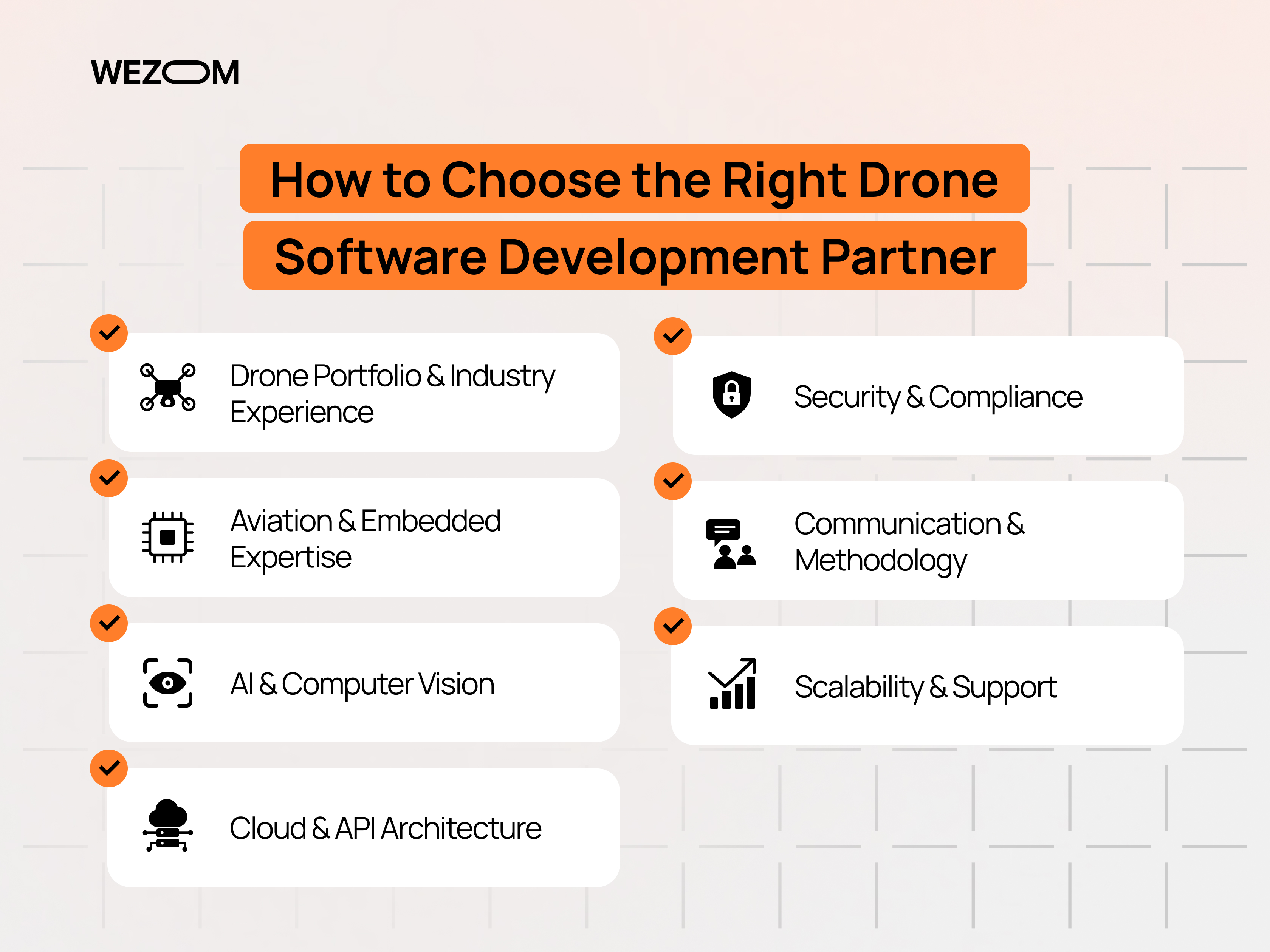
Choosing a drone software development partner requires evaluating more than general software skills. UAV projects combine aviation knowledge, embedded systems, AI, cloud infrastructure, cybersecurity, and enterprise integrations, so technical experience in these areas is essential.
Key factors to consider include:
- Drone portfolio and industry experience — review previous UAV projects and experience with applications such as inspection, mapping, automation, or analytics.
- Aviation and embedded expertise — ensure the team understands firmware, autopilot systems, sensors, telemetry, and hardware integration.
- AI and computer vision capabilities — evaluate experience with machine learning models, image processing, and automation workflows.
- Cloud and API architecture — check the ability to build scalable platforms and integrate drone data with existing business systems.
- Security and compliance practices — confirm that the partner follows secure development processes and understands regulatory requirements.
- Communication and methodology — assess project management processes, transparency, documentation, and collaboration approach.
- Scalability and support — ensure the team can provide additional specialists, maintenance, and post-launch improvements.
The right partner should not only deliver software but also contribute to architecture decisions, risk management, testing, and long-term product development. A strong drone software development company helps businesses build reliable, scalable solutions that can evolve with changing technology and operational needs.
Conclusion
Choosing between an in-house team and a drone software development company depends on business goals, technical requirements, available resources, and long-term strategy.
An internal team provides maximum control and ownership, making it suitable for organizations focused on continuous R&D, proprietary technologies, and long-term UAV innovation. However, building such a team requires significant investment in hiring, infrastructure, and maintaining specialized expertise.
A drone software development company offers faster access to multidisciplinary skills, including embedded development, AI, computer vision, cloud systems, and enterprise integrations. This approach is often more practical for startups, SMBs, and enterprises launching new drone initiatives.
For many organizations, a hybrid model provides the best balance by combining internal product knowledge with external technical expertise. The key is selecting a development approach that supports current needs while allowing future scalability, security, and continuous improvement of the drone platform.

FAQ
Should I build an in-house drone software team or hire a development company?
The choice depends on your goals, resources, and project complexity. An in-house team is suitable for companies focused on long-term R&D and proprietary technologies. A drone software development company is often better for startups, SMBs, and businesses that need faster delivery, specialized expertise, or access to skills such as AI, embedded development, and cloud architecture.
How much does it cost to hire a drone software development company?
The cost depends on project scope, required specialists, integrations, hardware complexity, and support needs. A simple MVP requires fewer resources than an enterprise drone platform with AI, computer vision, telemetry, and cloud infrastructure. Companies should evaluate not only initial development costs but also maintenance, updates, and future scalability.
Is outsourcing drone software development secure?
Outsourcing can be secure when working with a reliable partner that follows strong cybersecurity practices. Companies should define IP ownership, access controls, data protection requirements, and documentation standards. Choosing a partner with experience in enterprise software and secure development processes helps reduce risks related to sensitive drone data and proprietary technology.
What specialists are required for drone software development?
Drone software projects typically require a multidisciplinary team, including embedded developers, backend engineers, AI specialists, computer vision engineers, cloud architects, and QA experts. Depending on the use case, teams may also need GIS specialists, mobile developers, cybersecurity professionals, and experts in autopilot systems, telemetry, and sensor integration.
How long does it take to build a drone software team?
Building an internal drone software team can take several months because specialists in aviation software, embedded systems, and AI are difficult to hire. An external development partner can provide experienced engineers faster. The timeline depends on project requirements, team size, technology complexity, and the level of customization needed.
