
Choosing a 3PL software development partner is a strategic decision that directly affects how efficiently a logistics business can scale, automate operations, and adapt to changing market demands. Companies researching how to choose a 3PL provider should also consider the technology team behind their logistics platform, as the right software partner can be just as valuable as the right third-party logistics partner.
Unlike conventional business software, 3PL solutions must support warehouse management, transportation, inventory control, shipment tracking, carrier integrations, and customer communication within a single ecosystem. As logistics operations grow, disconnected systems and manual workflows often become barriers to efficiency and visibility.
An experienced 3PL software development partner builds scalable platforms that integrate WMS, TMS, ERP, CRM, carrier networks, and external APIs while automating critical processes across the supply chain. When evaluating potential partners, focus on logistics expertise, technical capabilities, long-term support, and a proven ability to deliver solutions that evolve with your business. This approach helps ensure your software remains a competitive advantage and strengthens collaboration with every third-party logistics partner you work with.
Why Your Choice of Development Partner Determines the Success of a 3PL Platform
Choosing a 3PL software development partner directly impacts the quality, scalability, and long-term value of a logistics platform. Unlike standard business applications, 3PL systems become a core part of daily operations, connecting warehouses, transportation workflows, inventory management, carriers, and customers.
A poorly designed platform can create additional operational challenges instead of solving existing problems. For example, limited integration capabilities may lead to inaccurate inventory data, delayed shipment updates, and inefficient communication between teams. The right partner focuses not only on software development but also on understanding logistics processes and building architecture that supports future growth.
A reliable development partner helps companies create solutions that improve:
- Operational efficiency by automating repetitive workflows such as order processing, shipment updates, and reporting.
- Scalability by designing flexible architecture that can support new warehouses, users, carriers, and business models.
- Warehouse automation through better inventory control, barcode/RFID support, and real-time data synchronization.
- Transportation workflows with improved routing, carrier management, and shipment visibility.
- Customer satisfaction by providing accurate tracking information and faster access to operational data.
The partner’s role also extends beyond initial deployment. A modern 3PL platform requires ongoing maintenance, security updates, optimization, and new integrations as business requirements change. Companies should evaluate whether a potential vendor can provide long-term support and reduce implementation risks through proper discovery, testing, and technical planning.
Ultimately, the success of a 3PL platform depends on choosing a partner that combines software engineering expertise with practical logistics knowledge. This ensures the solution is not only functional at launch but also capable of supporting business growth over time.
Define Your Business Requirements Before Evaluating Vendors
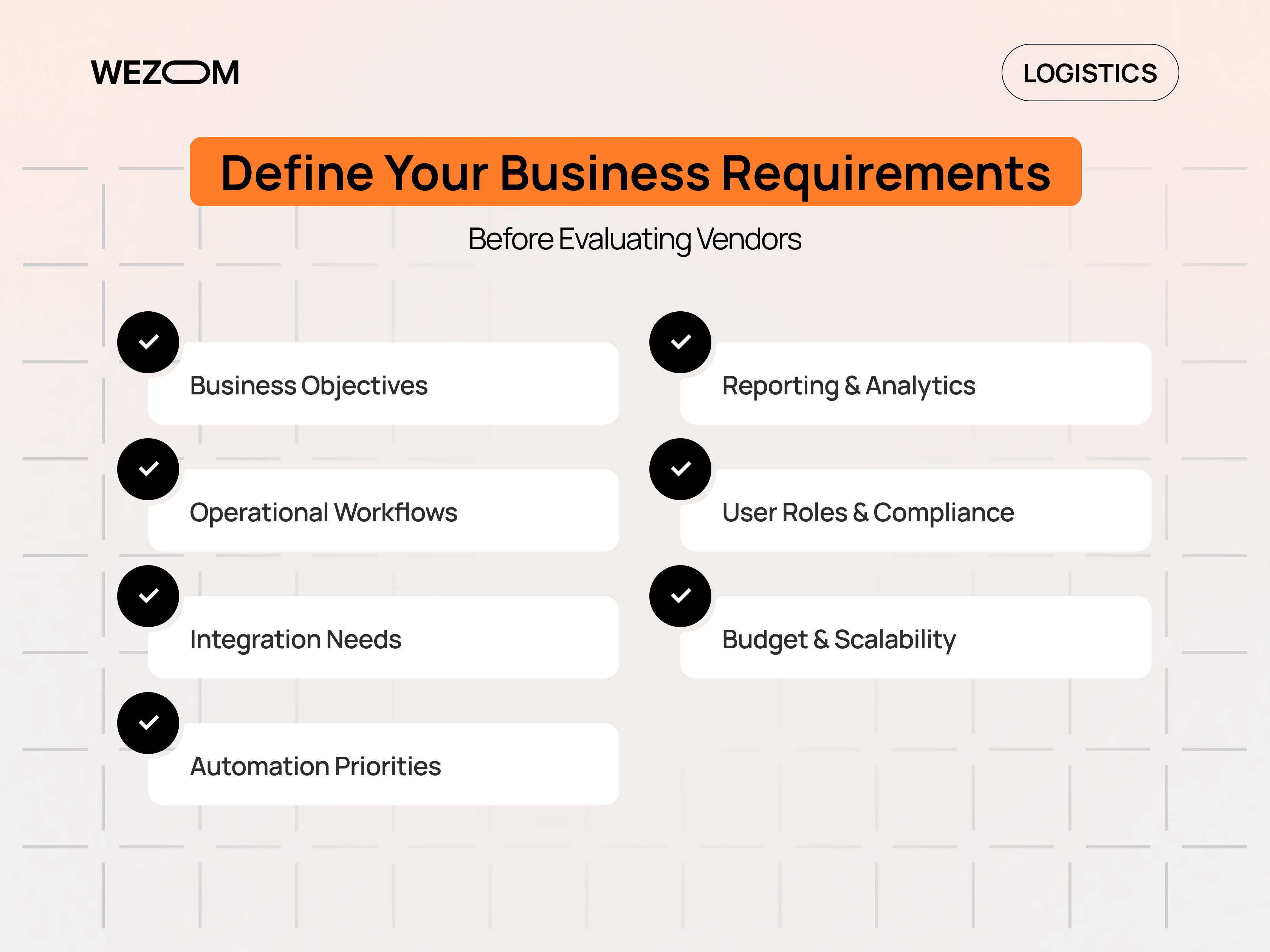
Before choosing a 3PL partner, companies should clearly define their business goals, operational challenges, and technology requirements. Many software projects fail not because of technical limitations but because the platform is built without a clear understanding of actual logistics processes.
The evaluation process should start with identifying key business needs: improving warehouse efficiency, optimizing transportation workflows, increasing shipment visibility, reducing manual operations, or supporting future growth. Companies should also analyze existing processes, including inventory management, fulfillment operations, carrier communication, and reporting requirements.
Important areas to define before selecting a vendor include:
- Business objectives – expected improvements and measurable outcomes from the platform.
- Operational workflows – warehouse processes, transportation activities, and fulfillment requirements.
- Integration needs – connections with ERP, WMS, CRM, TMS, carrier systems, and external APIs.
- Automation priorities – processes that can benefit from improved software workflows.
- Reporting and analytics – dashboards and data insights required for decision-making.
- User roles and compliance – access requirements, security standards, and industry regulations.
- Budget and scalability expectations – current investment limits and future platform growth plans.
A clear requirements definition helps companies select a development partner that can provide the right architecture, timeline, and implementation approach. It also reduces project risks by ensuring that technical decisions are aligned with real operational needs rather than assumptions.
Technical Capabilities Every 3PL Software Development Partner Should Have
A reliable 3PL software development partner should have strong technical expertise across integrations, cloud architecture, automation, security, and scalability. Modern logistics platforms are complex ecosystems that connect multiple systems, users, and operational processes, so technical decisions directly influence performance and future growth.
The partner should have experience with:
- System integrations – connecting WMS, TMS, ERP, CRM, EDI, carrier platforms, and external APIs.
- Cloud architecture – building flexible and scalable platforms that can support growing data volumes and users.
- Mobile solutions – developing applications for warehouse teams, drivers, and field operations.
- Real-time tracking and visibility – enabling accurate shipment updates and operational monitoring.
- Automation and optimization – supporting workflows such as inventory synchronization, routing, warehouse automation, and forecasting.
- Analytics and dashboards – transforming logistics data into actionable business insights.
- Cybersecurity and scalability – protecting sensitive information while ensuring the platform can expand with business needs.
Beyond individual technologies, a strong partner should understand how these components work together within logistics operations. The goal is not simply to build software but to create a reliable platform that improves efficiency, supports integrations, and remains adaptable as business requirements evolve.
Industry Experience Matters More Than Generic Software Expertise
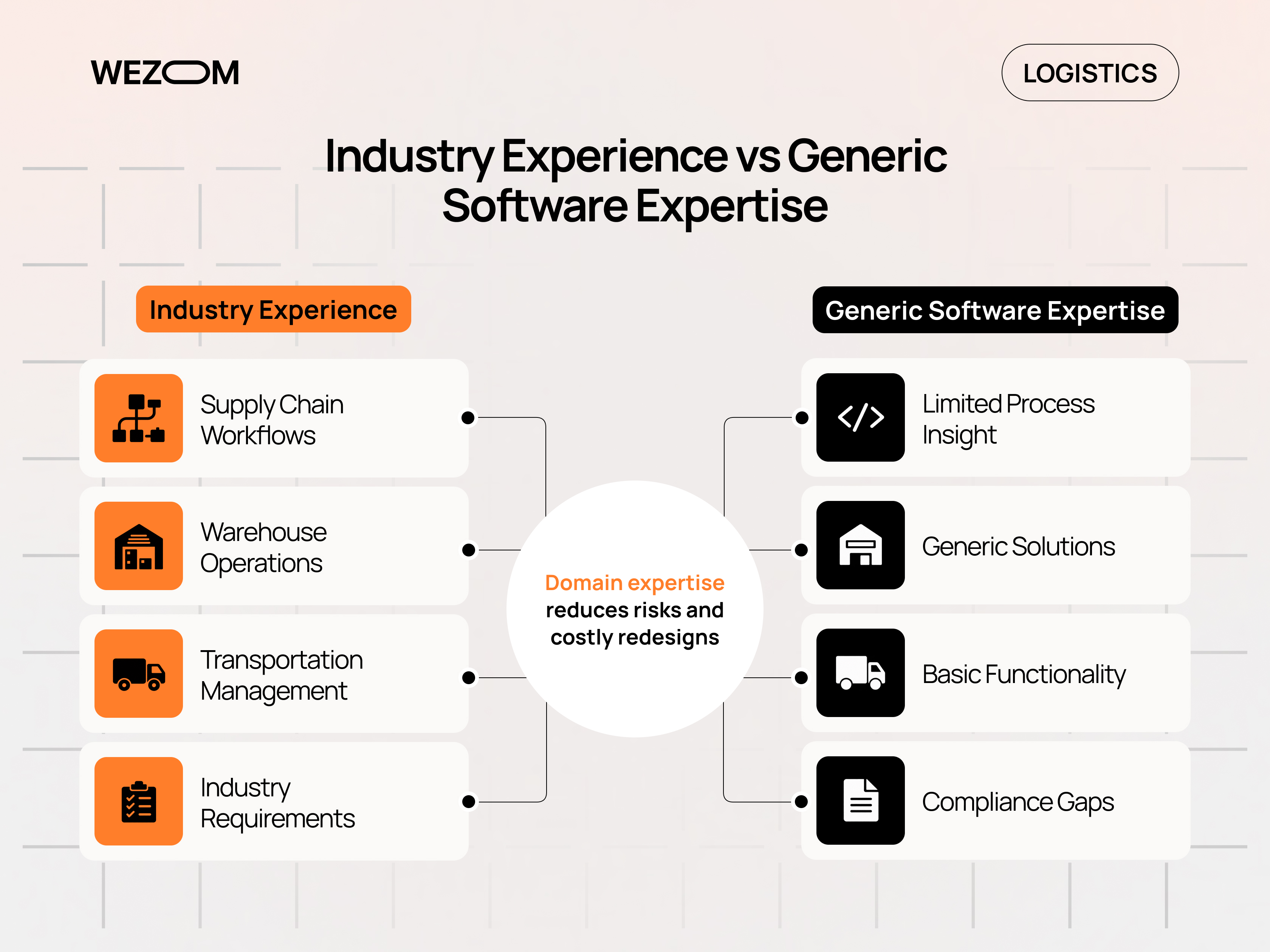
A 3PL platform is not just a software product – it is a digital representation of complex logistics operations. That is why choosing a development partner with real industry understanding can significantly influence the project outcome.
A team with logistics experience already understands the challenges behind warehouse management, shipment coordination, inventory accuracy, and carrier communication. Instead of building features in isolation, such a partner can design workflows that match how logistics businesses actually operate.
For example, a technically strong team without logistics expertise may create a tracking module that shows shipment status but does not consider carrier data delays, exception handling, or communication between different stakeholders. A logistics-focused partner understands these operational details and can build a more practical solution.
When evaluating a potential partner, companies should look beyond general software experience and analyze whether the team understands:
- Supply chain workflows – how orders move from inventory availability to fulfillment and final delivery.
- Warehouse operations – processes such as receiving, storage, picking, packing, and inventory synchronization.
- Transportation management – carrier coordination, routing, shipment visibility, and delivery optimization.
- Industry requirements – compliance considerations, security needs, and operational challenges specific to logistics.
Domain expertise helps reduce implementation risks, improve architecture decisions, and avoid costly redesigns after launch. The best 3PL partner combines engineering capabilities with practical logistics knowledge, creating a platform that supports both current operations and future business growth.
Red Flags That Indicate the Wrong Development Partner
Choosing the wrong 3PL software development partner can create serious challenges, including unexpected costs, delayed implementation, poor system performance, and a platform that does not match business requirements. Since logistics software becomes a critical part of daily operations, companies should carefully evaluate potential vendors before making a decision.
Several warning signs can indicate that a development partner may not be the right choice:
- No logistics experience – a lack of understanding of warehouse operations, transportation workflows, fulfillment processes, and carrier management can lead to ineffective solutions.
- Unrealistic deadlines – promising a complex platform without a proper discovery phase, architecture planning, and testing often results in quality issues.
- Unclear pricing – vague estimates without transparent project stages, scope definition, and maintenance costs can create budget risks.
- Limited integration expertise – modern 3PL platforms require reliable connections with ERP, WMS, TMS, CRM, APIs, and external logistics systems.
- Poor communication processes – unclear updates, limited documentation, and weak collaboration increase the risk of misunderstandings during development.
- No long-term support – a partner should provide maintenance, security updates, optimization, and future improvements after launch.
Companies should also pay attention to the vendor’s development methodology, testing approach, and technology choices. A reliable 3PL software development partner should be able to explain how the platform will remain secure, scalable, and adaptable as business needs evolve.
Identifying these risks early helps businesses avoid costly mistakes and choose a partner capable of delivering a reliable logistics platform that supports long-term growth.
Final Checklist for Choosing the Right 3PL Software Development Partner
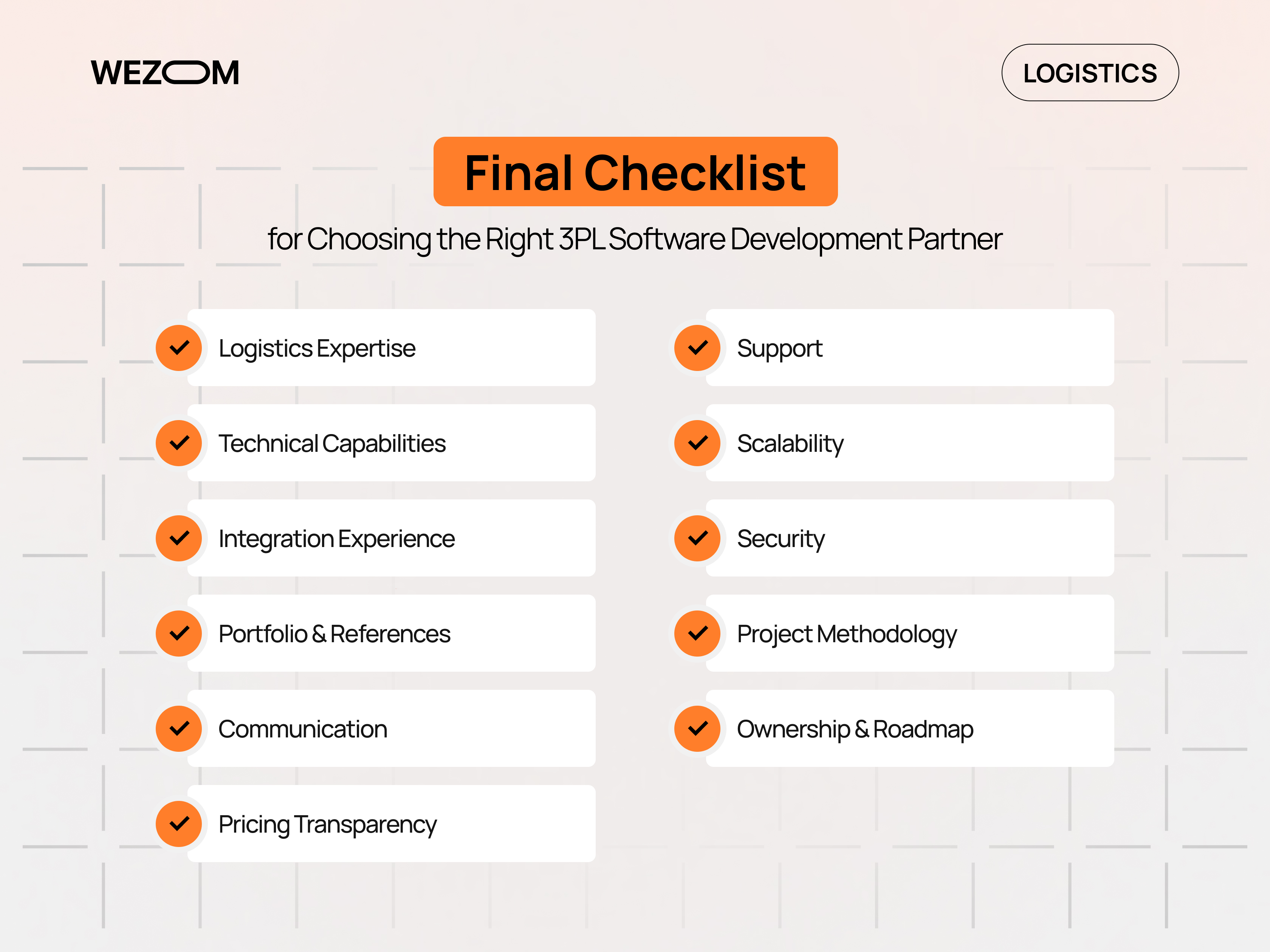
A structured evaluation process helps companies compare potential vendors and select a partner that can support both current needs and future growth. Choosing a development team should involve assessing technical capabilities, logistics understanding, communication practices, and long-term partnership potential.
Before making a final decision, companies should verify several important areas:
- Logistics expertise: The partner should understand warehouse operations, transportation workflows, fulfillment processes, carrier management, and supply chain requirements.
- Technical capabilities: The team should have experience with APIs, cloud platforms, mobile applications, integrations, analytics, and scalable software architecture.
- Integration experience: The partner should demonstrate the ability to connect ERP, WMS, CRM, TMS, EDI, and external logistics systems.
- Portfolio and references: Previous projects provide insight into development quality, industry knowledge, and delivery approach.
- Communication process: Clear reporting, regular meetings, documentation, and transparent collaboration reduce project risks.
- Pricing transparency: The vendor should explain costs, project phases, and potential future expenses.
- Support capabilities: Post-launch maintenance, troubleshooting, and future upgrades should be included in the partnership model.
- Scalability planning: The platform architecture should support future users, warehouses, integrations, and operational expansion.
- Security approach: The partner should follow secure development practices and consider compliance requirements.
- Project methodology: A structured development process with discovery, planning, testing, and deployment stages improves outcomes.
- Ownership and roadmap: Companies should understand who owns the software, how improvements are managed, and how the platform can evolve.
The best 3PL software development partner is not necessarily the cheapest or the fastest option. The right choice is a team that can combine business understanding, technical expertise, and long-term support into a reliable technology partnership.
Conclusion
Choosing a 3PL software development partner requires evaluating much more than programming skills. Logistics platforms are complex operational systems that must connect warehouses, transportation processes, inventory management, carriers, customers, and business analytics.
Companies should prioritize partners that understand logistics workflows, have strong integration capabilities, and can design scalable architectures. A successful platform depends on careful planning, realistic expectations, secure development practices, and ongoing improvement after launch.
Whether building a solution for enterprise logistics operations or evaluating 3PL software for small businesses, the selection process should focus on long-term business value. The right partner helps transform operational challenges into efficient digital workflows while creating a foundation for future growth.

FAQ
How do I choose the right 3PL software development partner?
Choose a partner by evaluating both technical expertise and logistics experience. Review their previous projects, integration capabilities, development approach, security practices, and post-launch support. A strong partner should start with business analysis, understand your workflows, and create a scalable solution aligned with your operational goals.
Why is logistics industry experience important when selecting a development partner?
Logistics software requires knowledge of warehouse operations, transportation workflows, inventory management, and carrier coordination. A partner with industry experience can better understand operational challenges, design practical workflows, and avoid costly mistakes. Domain expertise helps create a platform that supports real business processes instead of only delivering technical functionality.
How much does custom 3PL software development typically cost?
The cost of custom 3PL software development depends on platform complexity, required integrations, automation level, user roles, and scalability requirements. A simple solution may require less investment, while enterprise platforms with WMS, TMS, ERP integrations, analytics, and mobile applications require more resources. A detailed discovery phase helps define realistic budgets.
What integrations should modern 3PL software support?
Modern 3PL software commonly requires integrations with WMS, TMS, ERP, CRM, carrier systems, marketplaces, and external APIs. These connections help synchronize inventory, shipments, customer data, and operational workflows. The exact integration scope depends on business processes, existing systems, and future scalability requirements.
Can a 3PL software development partner integrate with my existing ERP or WMS?
Yes, an experienced development partner can integrate custom 3PL software with existing ERP or WMS platforms. The approach may include APIs, middleware, or EDI connections depending on system capabilities. Proper analysis of current infrastructure helps ensure reliable data synchronization while preserving existing technology investments.
